

Introduction
With the emergence of globalization, conflict or development anywhere in the world has an impact everywhere. However, consequences of conflicts are more disastrous to the developing or poor countries of the region involved, because they are already vulnerable in terms of their economies, infrastructure and technologies. Though global interdependence is considered a catalyst in the growth of world economies. But the recent Iran War exposed the weaknesses of this phenomenon. Highlighting that a single conflict between countries with significant military power can disrupt the economic structure of the world, i.e. surging oil prices, power shortages due to disruption in the export of LNG. Turmoil in the industrial sector due to fuel shortages. Together, these factors contribute to slow economic progress globally.
After the series of failed negotiations over Iran’s nuclear capabilities and missile development, in Muscat, Oman, and in Geneva in February. And weeks of Military buildup in the Indian Ocean. The US and Israel launched an attack on Iranian military sites, assassinated top military leadership, and on the residence of Iranian supreme leader, Ayatollah Ali Khamenei. Which resulted in his death along with his son and other family members. These unprovoked attacks prompted serious retaliation by Iran. Iran launched multiple missiles and drones towards Israel and also targeted the US military bases and stationed troops in the region.
Subsequently, Iran closed the Hormuz Strait and stopped transit through it immediately. To strengthen the closure of the Strait, Iran deployed sea mines in the waterway and threatened ships with destruction if they tried to pass without Iran’s authorization. Using the Strait of Hormuz as a weapon, was the move with which Iran threatened the international community many times that if Iran comes under attack, the Strait will be closed immediately, but practically they did so for the first time in the regime’s 47 years.
The Hormuz Dilemma
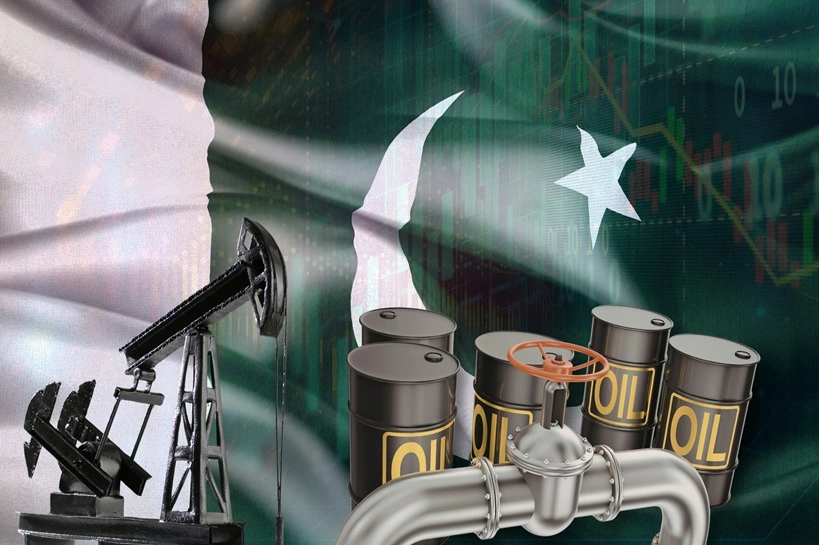
Closure of the Strait was the move that made the US-Israel War on Iran, a point of concern for the international community, ranging from Europe to Asia and Africa. Because the Strait of Hormuz handles 20% of global oil and gas trade. Oil prices surged from $72 before war, to the highest $115, after just 3 weeks of war. Which prompted G7 countries to release 400 million barrels of oil from strategic oil reserves, along this the United States of America also gave sanctions relief, to Russia and Iran for exporting oil to those countries that were getting oil from the Gulf states before war. These measures were taken to curb the surging oil prices.
The Gulf States
Halted flight operations and shutdown of airports across the region are also a consequence of the war and are severely impacting globalism. Iran’s retaliatory attacks on regional countries including UAE, Qatar, Saudi Arabia, and Bahrain that are hosting US military bases. It is not only an expansion of the war but also is an alarming situation for the Gulf States, which can undermine their position as a safe place for investment. And from another perspective, instability in the Gulf States is indirectly impacting the developing nations of the region, including Pakistan, India, Nepal and Bangladesh. Millions of workers from these countries are employed in the Gulf States, and they could be expelled from their jobs on the basis of security reasons and fiscal challenges of the Gulf States. Which can further deteriorate the conditions of poor families living in South Asia and most importantly in Pakistan.
Pakistan’s energy crisis
Pakistan has now emerged as a potential mediator between US and Iran and brokered a ceasefire between the warring parties. The country has also grappled with fuel and LNG shortages. Which led to closure of educational institutions across the country, shifted offices to four days a week, high fuel prices and cost of living. After the warring parties, Pakistan is the most affected country. However, war is just a serving reminder, and its contribution to the energy crisis is just the tip of an iceberg.
There are more deep-rooted problems that Pakistan needs to address, in order to minimize the impact at the time of regional crisis. Firstly, Pakistan is barely keeping its economy afloat and heavily relies on the IMF and regional allies. Due to which the government is facing difficulty in subsidising fuel and electricity. Because it has to comply with the IMF terms, in order to proceed with the smooth release of the next tranche.
Secondly, the outdated refineries and Infrastructure is also a key issue for Pakistan, because of its inability to refine the Russian crude oil, Pakistan’s oil imports domain is limited to the Gulf only. Thirdly, terrorism and political instability are the factors contributing to the sufferings of Pakistan, frequent terror attacks on foreign projects in restive provinces like KPK and Baluchistan, especially on CPEC projects have prompted investors to avoid Pakistan in terms of investment. Which ultimately affects the already fragile economy.
One of the most obvious reasons due to which Pakistan is bearing significant implications of the conflict is its proximity to the chokepoint, i.e., Strait of Hormuz, and because the country has a sharing border of almost 565 miles. These are the causes which have amplified the consequences of war for Pakistan.
Policy Recommendations
This interconnected system has led the world to growth, faded the differences between borders, created interdependence and interconnectedness among countries, and established a global economic system. Though to some extent it helps in mitigating poverty and promoting development. But the current day scenario is exposing globalization as a potential threat to the world, especially to developing nations like Pakistan in times of crisis.
Therefore, a country like Pakistan must need to adopt such policies that could save them from possible effects of globalization. By taking the US-Israel War on Iran as a case study, here are some policy recommendations.
Pakistan should build up-to-date refineries that could purify the crude oil of all kinds. This will provide it an option to diversify the imports in times of crisis. Building more storage sites will also be helpful because this will enable countries to absorb early shocks of the supply disruption. The oil or gas dependent power sector is vulnerable to even minor disruption in the supply chain, so for countries like Pakistan it is equally important to invest in nuclear, solar and hydropower energy. So alternative options could be used in times of crisis.
Strengthening the economic structure is also vital, as a country’s tax collecting institution should adopt the system of rewards and punishment for regular taxpayers and for tax evaders. Technological and IT industries should be set up to diversify the export domain from textiles to technology and IT services.
Investing in vocational institutions is also important for producing skilled individuals that could at least be able to earn their living beings. Furthermore, in dealing with the problem of militancy, Pakistan needs to coordinate with regional stakeholders and together pressurize the Afghan interim government to rein in the activities of individuals operating from their soil, along with that extra security measures should be taken in those areas where work on the important projects is being carried out. If these measures are taken, Pakistan will at least absorb the early waves of the crisis.
