

I. Introduction
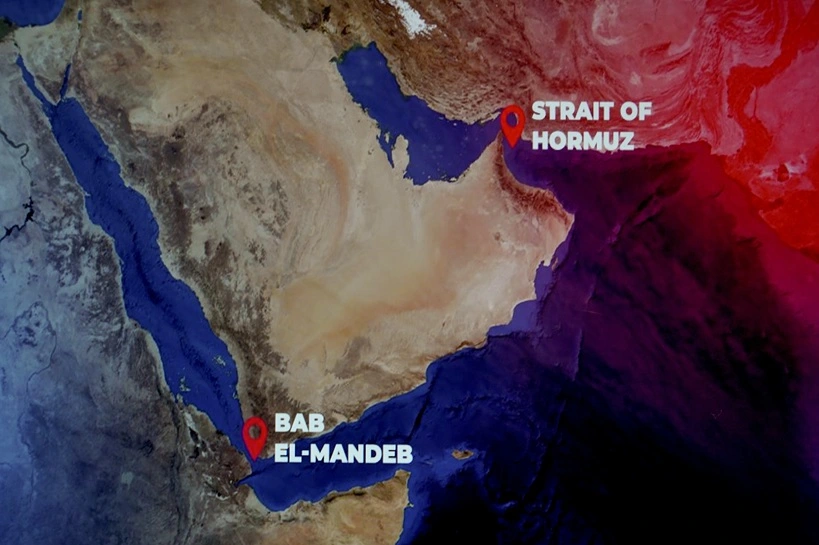
With the blockade of the Strait of Hormuz back in place by the resumption of fighting between the US and Iran, the exchange of fighting between Saudi Arabia and the Houthis raised concerns that the Houthis could open another front in the US/Israel-Iran War by attempting to blockade the Bab el-Mandeb Strait (32 km wide), which they once targeted during the 2023 Israel-Hamas War.
In fact, on Monday, July 20, 2026, the Houthi leadership declared that they would immediately implement a naval blockade against Saudi Arabia. As a result, the Strait of Hormuz and the Strait of Bab el-Mandeb, two of the world‘s major oil chokepoints, are facing a crisis of virtual blockade.
Based on this background, this paper aims to explain first where major oil chokepoints are located in the world; second, what different types of blockages and risks faced by each chokepoint are; and what counter-measures countries have taken to cope with such blockages and risks.
II. Where are major oil transit chokepoints in the world?
1. Overview
Chokepoints are narrow channels along widely used global sea routes that are critical to global energy trade and security because of the large volumes of petroleum and other liquids and liquified natural gas (LNG) that pass through them. [1]
International energy markets rely on reliable transport routes. The blockage of oil transit through a major chokepoint, even temporarily, can lead to substantial supply delays and higher shipping costs, resulting in higher world energy prices. Although most chokepoints could be circumvented by using other routes — which adds significantly to transit time — some chokepoints have no practical alternatives.
This paper analyzes seven chokepoints, whose disruptions could add thousands of miles of transit in alternative routes and affect oil and natural gas prices. The world’s most important strategic chokepoints by volume of oil transit are the Strait of Malacca, which links the Indian and Pacific Oceans and the Strait of Hormuz, leading out of the Persian Gulf (see Figure 1).

Figure 1: The world’s most important maritime oil chokepoints (source: EIA)
In the first half of 2025 (1H25), total world petroleum and other liquids supply was approximately 104.4 million barrels per day [b/d]. About 76% of that amount (79.8 million b/d) traveled via seaborne trade (see Table 1). Oil tankers accounted for 28% of the world’s shipping by deadweight tonnage in 2024, according to data from the United Nations Conference on Trade and Development (UNCTAD).
In 2024, global natural gas supply was approximately 407 billion cubic feet per day [Bcf/d]. About 13% of that amount (53 billion Bcf/d) traveled via seaborne trade.
Table 1: Volume of crude oil and petroleum liquids transported through world chokepoints and the Cape of Good Hope, 2020–1H25 (source: EIA)

2. Strait of Malacca

Figure 2: Map of Strait of Malacca and Pacific Ocean chokepoints (source: EIA)
The Strait of Malacca, linking the Indian Ocean and the Pacific Ocean, is the shortest sea route between oil and natural gas suppliers in Middle East and growing markets in East and Southeast Asia (see Figure 2).
According to the International Maritime Bureau’s Piracy Reporting Centre, piracy, including hijackings and attempted theft, is a threat to tankers in the Strait of Malacca and attacks on ships increased after 2023, especially around Singapore.
This strait is the primary chokepoint in Asia and Oceania, with an estimated 23.2 million barrels per day of oil flow in 1H25, equivalent to 29% of total maritime oil flows. And it is the largest chokepoint in the world in terms of oil transit volume. Crude oil generally makes up slightly over 70% of total oil flows through the Strait per year, and petroleum products account for the remainder (Table 2).
Alternative routes around the Strait of Malacca include two smaller Pacific Ocean chokepoints in the Indonesian archipelago, the Lombok Strait and the Sunda Strait, as Figure 2 shows. Flows could also travel a longer route around the entire archipelago. In addition, there is an oil pipeline that transports Middle Eastern crude oil from Myanmar to southwest China.
Table 2: Volume of crude oil, condensate, petroleum products, and liquefied natural gas transported through the Strait of Malacca, 2020–1H25 (source: EIA)

Key oil producers in the Gulf (Saudi Arabia, United Arab Emirates, Kuwait, and Iraq) transported nearly 60% of crude oil going through the Strait of Malacca in 1H25 (Figure 3). Flows through the Strait declined in 2024 as a result of OPEC+ crude oil production cuts; however, volumes increased again in 1H25 when production targets were increased. Despite Western sanctions on its oil exports, Iran has consistently increased oil exports to China since 2020. Russian volumes have fluctuated since 2022 due to Western sanctions and therefore accounted for just 2% of total flows through the Strait in 1H25.
Most of the crude oil flows that traverse the Strait of Malacca are destined for East Asian nations from the Middle East (see Figure 3). China accounted for 48% of the import volumes passing through the Strait in 1H25. Flows to India from all Russian ports have been higher in recent years following EU and US import restrictions on Russian oil, but oil flows through the Strait of Malacca change as volumes from Russia’s Pacific coast to India vary.
In 1H25, the US sent 800,000 barrels per day of crude oil and condensates from its Atlantic coast through Malacca to East Asia, and the U.S. Pacific coast received 200,000 barrels per day of cargoes via Malacca primarily from the Middle East.
In 1H25, approximately 9.2 Bcf/d of LNG flowed through the Strait of Malacca (see Table 2). Flows from Qatar to China more than doubled since 2020, increasing from 14% of total LNG flows through the Strait of Malacca in 2020 to 28% in 1H25.

Figure 3: Volumes of crude oil and condensate transported through the Strait of Malacca (source: EIA)
3. Strait of Hormuz
The Strait of Hormuz, located between Iran and Oman, connects the Persian Gulf with the Gulf of Oman and the Arabian Sea (see Figure 4). The Strait of Hormuz is wide enough and deep enough to handle the world’s largest crude oil tankers, and it is one of the world’s most important oil chokepoints. Large volumes of oil flow through the Strait of Hormuz, and, if it would be closed, alternatives that exist could move only a portion of the oil volumes out of the strait.

Figure 4: Map of the Strait of Hormuz and the Arabian Peninsula (source: EIA)
In 1H25, total oil flows through the Strait of Hormuz averaged 20.9 million barrels per day, or the equivalent of about 20% of global petroleum liquids consumption, and one-quarter of total global maritime traded oil. Between 2022 and 1H25, volumes of crude oil and condensate that pass through the Strait of Hormuz declined by 1.5 million barrels per day, only partially offset by a 0.5-million barrels per day increase in petroleum product cargoes (see Table 3 and Figure 5).
Pipelines in Saudi Arabia, the UAE, and Iran provide alternatives to the Strait of Hormuz (see Figure 4). Saudi Aramco’s East-West crude oil pipeline and the UAE’s Abu Dhabi pipeline together could provide approximately 4.7 million barrels per day of capacity to bypass the strait in the event of a supply disruption. By 2027, the UAE plans to build another 1.5 million barrels per day pipeline circumventing the Strait, from the Jebel Dhanna export terminal to Fujairah. Iran inaugurated the Goreh-Jask Oil Pipeline and the Jask oil export terminal on the Gulf of Oman with a single export cargo in 2021, and it sent a few small loadings in late 2024. The pipeline’s effective capacity remains around 0.3 million barrels per day.
Table 3: Volume of crude oil, condensate, and petroleum products transported through the Strait of Hormuz, 2020–1H25 (source: EIA)

Declining crude oil transit through the Strait of Hormuz after 2022 reflects several trends: voluntary cuts by OPEC+ member nations starting in 2023; oil disruptions around the Bab el-Mandeb Strait, which shifted some oil flows from Saudi Arabia to Europe away from the Strait of Hormuz (and subsequently the Bab el-Mandeb Strait) to its East-West Pipeline; and higher refining capacity in the Persian Gulf states. The OPEC+ cuts from Persian Gulf states offset the higher crude oil exports from Iran, which is not subject to OPEC+ production cuts, most of which went to China.
Saudi Arabia moves more crude oil and condensate through the Strait of Hormuz than any other country. About 0.3 million barrels per day of intra-Saudi Arabia volumes transited the Strait in 2023 from Saudi ports in the Persian Gulf, most notably Ras Tanura, to Saudi ports in the Red Sea. Red Sea attacks and oil disruptions in the Bab el-Mandeb Strait that began at the end of 2023 caused these intra-Saudi Arabia volumes to fall to 18,000 barrels per day by 1H25.
It was estimated that 89% of the crude oil and condensate that transported through the Strait of Hormuz went to Asian markets in 1H25. India, China, Japan, and South Korea were the top destinations, accounting for a combined 74% of all Hormuz crude oil and condensate flows in 1H25.
In 1H25, the US imported about 0.4 million barrels per day of crude oil and condensate from Persian Gulf countries through the Strait of Hormuz, accounting for approximately 7% of U.S. crude oil and condensate imports and 2% of U.S. petroleum liquids consumption. U.S. crude oil imports from countries in the Persian Gulf have dropped to the lowest level in 40 years as domestic production has increased.
In 1H25, 11.4 billion cubic feet per day, or over 20% of global LNG trade, transited the Strait of Hormuz, mainly from Qatar (see Table 3). China was the largest destination for LNG flows transiting Hormuz, with nearly one-third of total LNG volumes destinated for China in 1H25 transporting through the Strait of Hormuz.

Figure 5: Volumes of crude oil and condensate transported through the Strait of Hormuz (source: EIA)
4. Suez Canal, SUMED Pipeline, and Bab el-Mandeb Strait
The Suez Canal, the SUMED (the Suez-Mediterranean) Pipeline, and the Bab el-Mandeb Strait are strategic routes for Persian Gulf oil and natural gas shipments to Europe (see Figure 6). Total oil shipments via these routes accounted for approximately 6% of total seaborne-traded oil in 1H25.
The Suez Canal and SUMED Pipeline are in Egypt and connect the Red Sea with the Mediterranean Sea. The SUMED Pipeline, owned by Mubadala Energy in Abu Dhabi, transports crude oil north through Egypt between the ports of Ain Sukhna and Sidi Kerir and has a capacity of 2.5 million barrels per day.

Figure 6: Map of Arabian Peninsula maritime chokepoints (source: EIA)
The Bab el-Mandeb Strait is between the Middle East and the Horn of Africa, connecting the Red Sea to the Gulf of Aden and Arabian Sea.
Before 2024, most exports of petroleum and natural gas from the Persian Gulf to Europe and the Atlantic coast of North America passed through the Suez Canal or the SUMED Pipeline and both the Bab el-Mandeb Strait and the Strait of Hormuz. However, after Yemen-based Houthi rebels launched attacks on commercial ships transiting the Red Sea started in November 2023, some vessels and ships began taking longer, more costly routes around the Cape of Good Hope, which avoids the Suez Canal as well as the Bab el-Mandeb Strait.
Approximately 4.9 million barrels per day of crude oil and petroleum products transited the Suez Canal and the SUMED Pipeline in 1H25, and an estimated 4.2 million barrels per day also transited the Bab el-Mandeb Strait. Both volumes were about half of the flows in 2023 (see Table 4).
Saudi crude oil and condensate volumes flowing through the Bab el-Mandeb Strait also declined by more than 50% from 2023 to 2024; however, Saudi volumes transporting through Suez and SUMED declined only 10% as Saudi Arabia increased exports via the East-West Crude Oil Pipeline and Red Sea terminals.
Table 4: Volume of crude oil, condensate, and petroleum products transported through the Suez Canal, SUMED Pipeline, and Bab el-Mandeb Strait, 2020–1H25 (source: EIA)

In 1H25, Russia transported more crude oil and condensate through the Suez Canal and the Bab el-Mandeb Strait than any other country. After the Russia-Ukraine War began in February 2022, most of Russia’s exports from the west of the country shifted from Europe to Asia, mainly India. Russian ships have rarely been targeted by the Houthi’s attacks in the Bab el-Mandeb Strait, and volumes of Russian crude oil and condensate transporting through the Suez Canal and the Bab el-Mandeb Strait in 2024 and 1H25 were little changed from 2023 (see Figure 7).

Figure 7: Volume of crude oil and condensate transported through the Suez Canal and SUMED Pipeline (source: EIA)
LNG flows through the Bab el-Mandeb Strait were near zero in 2024 and 1H25 (Table 4). LNG flows through both the Suez Canal and the Bab el-Mandeb Strait declined sharply in 2024 as vessels avoided the Strait because of security concerns and high insurance rates. Since 2023, LNG flows through the Suez Canal are almost entirely for delivery to Jordan or Egypt.
5. Danish Straits
The Danish Straits are a series of channels that connect the Baltic Sea to the North Sea (see Figure 8).

Figure 8: Map of the Danish Straits (source: EIA)
Historically, the Danish Straits were an important route for Russia’s seaborne oil exports to Europe before global trade patterns shifted following the start of the war in Ukraine in 2022 and subsequent sanctions on Russia’s oil exports by the EU.
An estimated 4.9 million barrels per day of crude oil and petroleum products flowed through the Danish Straits in 1H25, equivalent to 6% of global maritime trade. This volume is almost 60% higher than in 2021 because of the shift in trade flow from Russia (see Table 5).
The Kiel Canal in northern Germany provides an alternative route for oil to the Danish Straits; however, it serves small tankers, and almost only oil products are shipped through it (see Figure 8). Oil flows through the canal were nearly 200,000 barrels per day in 1H25.
Table 5: Volume of crude oil, condensate, and petroleum products transported through the Danish Straits, 2020–1H25 (source: EIA)

Russia used to be the largest source of oil products flowing through the canal, but its share dramatically fell after 2022. At the same time, the Netherlands, Denmark, and Belgium began to transport more oil products through the canal.

Figure 9: Volume of crude oil and condensate transported through the Danish Straits (source: EIA)
Although Russia remained the largest oil exporter through the Danish Straits in 1H25, it shipped most of these volumes from the Baltic Sea to Türkiye and Asia, instead of western Europe and the United States, representing a shift from the historical pattern. Russia’s oil exports to India through the Danish Straits increased rapidly in 2023 as India took advantage of the lower prices offered by Russia compared with the Middle East and other producers (see Figure 9).
Starting in 2022, oil flows crossing the western side of the Danish Straits from countries such as the United States, the United Kingdom, Norway, and Egypt to countries east of the Straits, such as Finland and Poland, rose and replaced oil imports from Russia to these countries.
In 1H25, 1.6 billion cubic feet per day of LNG transited the Danish Straits, about triple the volume in 2020 (see Table 5). The US became the largest supplier to countries east of the Danish Straits in 2021 as US LNG export infrastructure grew rapidly during the past few years. Much of these volumes replaced Europe’s pipeline imports from Russia beginning in 2022.
6. Turkish Straits
The Turkish Straits, which includes the Bosporus and Dardanelles waterways (also known as the Istanbul Strait and the Çanakkale Strait, respectively), divide Asia from Europe (see Figure 10). The Dardanelles is a 37-nautical mile waterway that links the Sea of Marmara with the Aegean and Mediterranean Seas. The Bosporus is a 17-nautical mile waterway that connects the Black Sea with the Sea of Marmara. Both waterways are in Türkiye and supply western Europe, Asia, and southern Europe with oil from Russia and the Caspian Sea region.

Figure 10: Map of Turkish Straits chokepoints (source: EIA)
Less than half a nautical mile wide at the narrowest point, the Turkish Straits are among the world’s most difficult waterways to navigate. More than 45,000 vessels and ships transited the straits in 2024, making the Turkish Straits one of the world’s busiest maritime chokepoints.
An estimated 3.7 million barrels per day of crude oil and petroleum products flowed through the Turkish Straits in 1H25, equivalent to 5% of global maritime trade. Approximately 60% of this volume was crude oil, and the remainder were oil products (see Table 6).
Table 6: Volume of crude oil, condensate, and petroleum products transported through the Turkish Straits, 2020–1H25 (source: EIA)

Black Sea ports are one of the primary export routes for both crude oil and oil products from Russia and other Eurasian countries, including Kazakhstan and Azerbaijan (see Figure 11). Kazakhstan is the largest exporter through the Turkish Straits. Kazakhstan and Russia increased crude oil and condensate sent through the straits by 400,000 barrels per day between 2022 and 1H25. Kazakhstan exported more crude oil to Europe through the Caspian Pipeline Consortium oil pipeline using Russia’s Black Sea port of Novorossiysk, and Russia sent more crude oil to India.
Alternatives to transporting through the Turkish Straits include the Baku-Tbilisi-Ceyhan Pipeline from Azerbaijan in the Caspian Sea to the Port of Ceyhan in Türkiye, and the Iraq-Türkiye Pipeline from the Kurdistan region in northern Iraq, which returned to operations in September 2025 after being out of service since March 2023.
Türkiye does not allow LNG cargoes to pass through the Bosporus Strait because of safety concerns but allow cargoes through the Strait of Dardanelles. In 1H25, Türkiye imported about 0.6 billion cubic feet per day of natural gas through its Marmara LNG regasification terminal, mostly from the US and Algeria (see Table 6). The terminal is located on the Sea of Marmara inside the Strait of Dardanelles, so LNG carriers travel eastbound through the Strait to reach it.
If a disruption took place at the Strait of Dardanelles, Türkiye could still receive natural gas through its other LNG import terminals, which are located outside of this Strait, or import natural gas via pipeline from Russia, Azerbaijan, or Iran.

Figure 11: Volume of crude oil and condensate transported through the Turkish Straits (source: EIA)
7. Panama Canal
The Panama Canal connects the Pacific Ocean with the Caribbean Sea and the Atlantic Ocean. This canal is 50 miles long, and its narrowest point is the Culebra Cut (nearly 9 miles long) at the Continental Divide (see Figures 12 and 13).
More than 2.3 million barrels per day of petroleum and other liquids were transported through the Canal in FY 2025 (October 1, 2024–September 30, 2025), most of which (about 2.2 million barrels per day) were refined oil products (see Table 7).
Although only 3% of total global maritime petroleum and petroleum products were transported through the Panama Canal in FY 2025, the waterway is an important route for petroleum products – which, unlike crude oil, travel on smaller vessels able to navigate the narrow canal – and LNG traveling from the U.S. Gulf Coast to western South America and to Asia.

Figure 12: Map of Panama (source: EIA)

Figure 13: As of February 2026, Panama Canal and Lock System (source: EIA)
Table 7: Panama Canal oil flows, 2020–2025 (fiscal years) (source: EIA)

Alternatives to the Panama Canal include the Straits of Magellan, Cape Horn, and Drake Passage at the southern tip of South America, but these routes add up to 8,000 miles of travel or involve traversing dangerous waterways. Other alternative routes include going eastward around the Cape of Good Hope in South Africa or through the Suez Canal. The Trans-Panama Pipeline is another alternative route for crude oil transportation. It is located near the border with Costa Rica and runs from the Port of Chiriqui Grande in Bocas del Toro, Panama, on the Caribbean Sea to the Port of Charco Azul on the Pacific coast. The pipeline has a capacity of 864,000 barrels per day of crude oil, and the pipeline transported almost 400,000 barrels per day in 2024 and 2025.
Insufficient water levels at Gatún Lake, which supplies water to operate the canal lock, have disrupted flows through the Panama Canal in the past (see Figure 13). Total oil flows through the canal dropped in FY 2024 because of drought, limiting ship traffic. Constraints at the Panama Canal led to long delays, higher freight rates for vessels and ships carrying liquefied petroleum gas, and rerouting of cargoes through the Suez Canal or around the Cape of Good Hope. Oil product flows through the canal recovered in FY 2025 after water levels returned to average levels.
III. Different types of blockages and risks that each oil chokepoint has faced
1. Strait of Hormuz
The possibility of the blockage of the Strait of Hormuz by Iran had been raised periodically for decades as the Gulf region experienced four major wars (the Iran-Iraq War, 1980–88, the Gulf War, 1991, the Iraq War, 2003, and the 12-Day War between Israel and Iran in June 2025).
Times of conflict and crisis in the region are frequently accompanied by speculation that Iran will “close” the Strait of Hormuz, and Iran’s parliament (Majlis) reportedly voted to approve such a move after the US launched airstrikes against Iranian nuclear facilities at the end of the 12-Day War with Israel in June 2025.
While such proclamations may play well domestically and invariably receive media attention, until March 2026 it was understood to be far harder in practice to block or close the Strait (as Egypt did, for example, with the Suez Canal in 1956–57 and 1967–75). Alleged difficulty in closing the passage was partly because the waterway lies in Omani as well as Iranian territory; indeed, both the outbound (southern) and inbound (northern) shipping lanes are located in Omani waters as they traverse the Strait itself, although portions of the approaches either sides of Hormuz pass through Iran water. As such, any attempt by Iran to prevent shipping from transiting the Strait would be an act of aggression against Oman.
As Iran has faced a war for national survival, such considerations were secondary. In fact, the closure of Hormuz has been central to Iran’s strategic doctrine in the 2026 War with Israel and the US. By closing the Strait and halting trade, and through the knock-on effects on the cost of shipping, insurance premiums and heightened risks for maritime operators, Iran sought to impose costs on its US-allied neighbors and on the global economy that, in turn, impose pressure on Israel and the US to end the war. As it turned out in the opening weeks of March 2026, closing the Strait was far simpler than envisioned. Practical restrictions on the passage of traffic through the Strait came as much from soaring war risk premiums and other insurance bottlenecks as from attacks on the ships themselves. [2]
During the Iran-Iraq War, Iran took similar actions to harass shipping but did not close the Strait of Hormuz. Then, Iran placed mines in shipping lanes and struck tankers and oil loading facilities with anti-ship missiles, drawing a U.S. military response in 1988 after an US ship struck a mine. Iran refrained from attacking shipping in the Strait of Hormuz itself and instead did so near the Shatt al-Arab in the northern Gulf, astride Iraq’s only outlet to the sea, and also planted mines north of Qatar in 1987 which inflicted some damage on military and commercial shipping.
Shipping also became a major target in what became known as the Tanker War, leading Kuwait to ask the U.S. to protect its tankers. In 1987, the US reflagged Kuwaiti tankers under the American flag to provide them with naval protection through the Gulf in Operation Earnest Will. This operation, along with U.S. naval escorts, was intended to secure freedom of navigation and deter attacks from Iran, which was targeting shipping to disrupt oil revenues. During the Iraqi occupation of Kuwait, Iraq mined the Kuwaiti coast in 1991, to forestall coalition naval operations, and, a decade later, placed mines around the Khor Abdullah Channel to the Iraqi Port of Umm Qasr ahead of the US-led invasion in 2003; in both cases, the affected areas were at the northern end of the Gulf rather than in or near the Strait of Hormuz.
Iran’s attacks on shipping in 2026 appear to largely be caused by unmanned aerial vehicles or armed drones. Other options to disrupt flows include mine laying, use of anti-ship missiles, rocket, artillery, armed speedboats, and submarine attacks launched from the network of IRGC-Navy bases located along the Iranian coastline. The shallow passage is also thought to be vulnerable to blockage by scuttled ships. As seen, conflict in the Strait brings sharp rises in hull and machinery insurance costs and war risk premiums which feed into higher operating costs, even in the absence of an actual attack on a ship. During the 12-Day War in June 2025, the cost of insurance surcharges rose more than 60 percent although rates subsequently fell back once Israel and Iran agreed to a US-brokered ceasefire. The collision of two oil tankers in the Gulf of Oman, near the entrance to the Strait of Hormuz, during the 12-Day War highlighted another risk arising out of interference with, or jamming of, GPS signals and navigational systems in such a busy shipping channel.
In March 2026, vessels and ships in (or on their way to) the Gulf had existing war risk policies cancelled and replaced by new insurance rates for physical damage to vessels that rose to between 1 and 1.5% of a vessel’s insured value, from an average of 0.25% prior to the start of military operations in Iran.
2. The Bab al-Mandab Strait and the Red Sea
The Bab al-Mandab Strait and the Red Sea illustrates a different set of blockages and risks that are rooted in the lack of stability on land. Here, the challenges of governance create and amplify gaps in security. The nature of the threat posed by “failing” or “failed” littoral states such as Somalia and Yemen has changed over time. In the Somali case, policy making was initially focused on the breakdown of governance and state collapse in the 1990s.
The challenge of “Somali piracy” first presented itself in 1994 when 26 “pirates” posing as coastguard personnel hijacked a cargo vessel, the MV Bonsella, and used it as a base from which to attack other shipping in the Gulf of Aden. Already in 2000, 23 incidents of piracy were recorded off the Somali coastline as clan-based conflict on land fueled localized armed conflicts and networks of criminality which included contests over marine resources.
In 2007, after the Union of Islamic Courts were out of power in Mogadishu, political instability across Somalia worsened, and the incidence of maritime attacks off its coastline more than doubled, and then doubled again in 2008, by which time “Somali piracy” had become an issue of serious global concern.
The attack on the MV Sirius Star, a VLCC (A Very Large Crude Carrier) operated by Vela International Marine, the shipping subsidiary of Saudi Aramco, in November 2008, drew worldwide focus to the issue of piracy off the East African coast as it was the largest ship captured by pirates and the attack took place 450 miles out to sea. The tanker was loaded with two million barrels of crude oil, worth approximately $100 million (at that time), and was sailing from Saudi Arabia to the US via the Cape of Good Hope. The Sirius Star was diverted to Somalia, and pirates initially demanded a ransom of $25 million, but the ship and its crew were released in January 2009 after a reported ransom of $3 million was paid.
On the other side of the Gulf of Aden and the Bab al-Mandab Strait, state control (which was weak and tenuous to begin with) started to break down in Yemen in the late-2000s and accelerated sharply in the 2010s. Political contestation of Ali Abdullah Saleh’s patronage-based regime emerged in north and south Yemen with the onset of the Houthi Wars and the rise of the Southern Movement in 2004 and 2007, respectively.
A sense of permanent crisis was apparent even before the mass protests in 2011 which toppled the Saleh regime and set in motion a chain of developments which culminated in the seizure of Sana’a by the Houthis in September 2014, and a Saudi-led coalition’s military intervention in March 2015. Much of western and northern Yemen, including the Tihamah Red Sea coastline and the Port of Hodeida, came under Houthi control, and in 2017 the Houthi rebels began to target shipping in the southern Red Sea. A July 2018 attack on two Saudi oil tankers did little physical damage but led Saudi Arabia to temporarily suspend transit through the Bab al-Mandab Strait.
Attacks by the Houthi rebels on shipping since the beginning of the Gaza War in October 2023 largely closed off the Red Sea to oil and gas transit, except for oil through the East-West Pipeline in Saudi Arabia for loading at the Yanbu Terminal onto tankers bound northward for Europe. In the first half of 2023, prior to the October 7 attack by Hamas which precipitated the war, 12% of seaborne oil trade and 8 percent of LNG trade passed through the Bab al-Mandab Strait on its way through the Red Sea to the Suez Canal.
The first attack on a commercial vessel took place in November 2023 seized the Galaxy Leader, a Bahamian flagged cargo ship bound from Türkiye to India, near Hodeida, and by September 2025 a total of 114 vessels and ships had come under various forms of attack in the Gulf of Aden, the Bab al-Mandab Strait, and the southern Red Sea. These included 32 tankers carrying oil products or crude oil and one tanker carrying Liquefied Petroleum Gas (LPG) which was attacked twice with missiles in March 2024 off the coast of Hodeida. The attacks reached a peak between December 2023 and February 2024, spiked again in June 2024, and after months of dormancy, saw two bulk carriers — the Eternity C and Magic Seas — sunk on consecutive days in July 2025.
The impact of the disruption to shipping in the Red Sea was immediate and lasting. Data from Lloyd’s List showed that weekly transits through the Bab al-Mandab Strait more than halved in the two months after the first Houthi rebels’ maritime attack in November 2023 and has remained at a level of about 200 transits a week ever since (from more than 500 weekly transits prior to the Gaza War). Moreover, the two attacks in July 2025 which followed months of quiet had the impact of setting back operators’ plans to consider returning to the Red Sea rather than continuing to re-route around the Cape of Good Hope.
Shipments of crude oil through the Red Sea dropped to 2.48 million barrels per day by August 2024, a 40% drop from the twelve-month average prior to October 2023. Primarily affected were flows of oil from Saudi Arabia and Iraq to Europe and from the U.S. Gulf Coast to China, South Korea, and India. In contrast, there was a significant increase in Russian oil shipments to Asia as Russian (and Chinese) vessels and ships largely avoided becoming Houthi targets.
Shipments of LNG through the Bab al-Mandab Strait came to a halt in February 2024 although LNG carriers passed southbound through the Suez Canal for deliveries to Aqaba and Ain Sokhna in the northern Red Sea only. Average journey times from ports in the countries of Gulf Cooperation Council to Rotterdam rose from 19 to 34 days as a result of sailing around Africa. Whereas the attacks on shipping in the Bab al-Mandab Strait and the Red Sea typically involved the use of drones, anti-ship ballistic missiles, cruise missiles, rocket-propelled grenades, and remote-controlled explosive boats.
3. Straits of Malacca and Singapore
Compared to the attacks on shipping in the Bab al-Mandab Strait and the Red Sea by the Houthi rebels, attacks in the other key maritime Straits of Malacca and Singapore were lower-intensity. Acts of piracy in the Strait of Malacca increased significantly in the 1990s and early-2000s but the establishment of coordinated naval patrols in 2004 — the Malacca Straits Patrol initiative involving naval forces from Indonesia, Singapore, Malaysia, and Thailand — was highly effective in combating the threat to shipping.
More recently, the threat to shipping from armed robbery (more than outright piracy) has shifted eastward to the Strait of Singapore, a distinct body of water but part of the extended waterway that is one of the busiest shipping lanes and trade routes in Southeast Asia. The lack of any equivalent to the Malacca Straits Patrol and the inability of Indonesia, Singapore, and Malaysia to coordinate naval activity has led to a high incidence of maritime crimes against vessels and ships as they slow down to enter the narrow channel.
A fourfold rise in incidents was recorded in the Straits of Malacca and Singapore for January-June 2025 to 80 incidents compared with the same six month period of 21 incidents in 2024 with all but one occurring in the Strait of Singapore. This was the highest level of incidents since 2015 but none of the attacks were categorized as serious and 72 of the 80 incidents did not result in any harm to crews; moreover, bulk carriers were targeted rather than gas and oil transits and there was no appreciable impact on insurance premiums or shipping costs.
4. The Panama Canal
Passage through the Panama Canal is a shortcut between the Pacific and Atlantic that cuts thousands of miles from journeys. Transiting cargoes include exports of LNG and oil from the U.S. Gulf Coast bound for Asian destinations. Between 4 and 6 percent of global trade passes through the Panama Canal each year and in 2023 one-third of trade going through the Canal was made up of vessels and ships carrying petroleum products, hydrocarbon gas liquids, and chemicals.
However, low water levels in the Canal in 2023 and 2024, a result of reduced rainfall, longer periods of drought, and a particularly strong El Niño, led the Panama Canal Authority to impose restrictions on the number of vessels and ships that could pass through it each day, from 38 down to 20 (and then raised to 24). The overall number of ship transits through the Panama Canal dropped by 29% in the FY 2023-24 and VLGC and LNG carriers were more affected by lower draft levels than container ships.
It was for this reason that more shipments from the U.S. Gulf Coast to Asian countries were being re-routed through the Suez Canal when the Gaza War and Houthi rebels’ maritime attacks began. As a result, journey times from the U.S. Gulf Coast to Chiba in Japan increased from approximately 27 days (through the Panama Canal) to 44 days across the Atlantic and through the Suez Canal and 48 days around the Cape of Good Hope.
Finally, tensions between Chinese and U.S. interests vis-à-vis the Panama Canal at the beginning of Donald Trump’s second term in office in 2025 illustrated how chokepoints remain vulnerable to geopolitics. A subsidiary of a Hong Kong-based firm, CK Hutchison, had operated the ports of Cristobal and Balboa, at the Atlantic and Pacific entrances to the Canal, respectively, since 1997 in a contract that had just been extended for another 25 years, but the Panamanian government came under strong U.S. pressure to cancel the contracts and award them to a consortium of U.S. investors led by BlackRock, New York-based asset management company.
While the mercurial stance of the second Trump administration played into the transactional pressure on Panama, the underlying points of geopolitical contention were of longer standing. In fact, in March 2024, during the Biden administration, the commander of U.S. Southern Command claimed that China has been playing a “long game” with the “development of dual-use sites and facilities” through investment in “critical infrastructure sites such as deep-water ports” and mentioned the Panama Canal as one such “global strategic chokepoint.”
5. Danish Straits and Turkish Straits
In an era of growing great power competition and global strategic rivalries, the fact that Russia is a major exporter of oil and gas means that the energy sector is more vulnerable than most others to direct as well as indirect geopolitical tension. Russian gas and oil from terminals in the Baltic Sea and the Black Sea must pass through the Danish Straits and Turkish Straits (Bosphorus and Dardanelles), respectively, and could be subject to potential attempts at closure.
In addition, the pipelines through which Russian gas flows to Europe are exposed to similar transit risks. Pipelines were vulnerable to sabotage, attack, or political action, both before and after the Russian invasions of Ukraine in 2014 and 2022 in incidents such as the 2008–2009 disruption to Russian gas supplies to (and through) Ukraine and the 2022 explosions that made the Nord Stream Pipeline inoperable.
IV. Examples of Countermeasures
A range of countermeasures have been adopted by various governments and the energy and private sectors alike to address and attempt to mitigate the various threats to chokepoints. The most visible is the plethora of naval task forces that have been established to protect and escort shipping as they pass through several of the most vulnerable Straits and other maritime hot spots. Mention has already been made of the Malacca Straits Patrol Initiative and its effectiveness in reducing to almost zero the incidence of piracy in the Strait of Malacca — but not the Singapore Strait. Moreover, the U.S. Navy has a presence near almost every major global chokepoint in a reflection of the close links between energy and economic security. [3]
In the Middle East, the Combined Maritime Forces (CMF) were formed in 2001 as a U.S.-led coalition initially with 12 members that increased to 46 until the UAE withdrew from the initiative in 2023. The CMF consists of five task forces on patrol or otherwise seeking to secure maritime areas along the entire coastline of the Horn of Africa and Arabian Peninsula.
The US-led task forces coexist alongside other naval initiatives that amount in practice to a fragmented rather than a genuinely multinational response to maritime threats, especially in and around the Bab al-Mandab Strait, the Red Sea, and the western Indian Ocean.
Both EU and NATO launched their own maritime initiatives (Operation Ocean Shield and Operation Atalanta, respectively) to provide escorts to shipping and establish deterrence in the Horn of Africa in 2009. Other countries, such as Japan, India, and China, sent vessels of their own, resulting in a patchwork of missions. The lack of a fully integrated approach was replicated a decade later when, in 2019, the Trump administration sought to establish a new naval coalition to protect shipping in the Gulf from Iranian attack, only for European countries, including France and Germany, to avoid any perceived association with “maximum pressure.” The US, UK, and Australia then set up a relatively small International Maritime Security Construct, based in Bahrain, to provide escorts for their ships in and near the Strait of Hormuz, while nine European countries established a separate (also small) set of naval escorts (EMASOH), based in Abu Dhabi.
Policy responses in 2024 to the Houthi rebels’ attacks on shipping indicated how political and security considerations do not always align. Once again, U.S. officials put together a coalition to launch military operations against Houthi targets in Yemen, but Bahrain was the only Arab country to join Operation Prosperity Guardian (and in an administrative rather than operational capacity).
Memories in Saudi Arabia and the UAE of years of Houthi rebel’s missile and drone attacks on cities and infrastructure, which largely ended in 2022, precluded any participation in a new campaign against the group. Separately, the US and UK forces launched airstrikes against the Houthis (Operation Poseidon Archer) to some effect. The EU formed a separate naval patrol, Operation Aspides, to patrol the Bab al-Mandab Strait, Red Sea, and Gulf of Aden, and accompany merchant vessels and ships to offer protection against strikes, with a defensive posture that lacked the offensive capabilities assigned to the U.S.-led military operations. And yet, the combined naval and air operations made little dent in the Houthi rebels’ ability to conduct attacks, either before or after the U.S.-Houthi ceasefire agreement in May 2025 which temporarily limited them.
In addition to greater sharing of intelligence and streamlining of the use of existing and available assets, a different example of a countermeasure is investment in alternative infrastructure, such as pipelines, to bypass or mitigate the vulnerability to seabound chokepoints. This is not a failsafe option, because the pipelines themselves can become targets and can function as chokepoints, and geopolitical considerations mean they are not viable options for the export of oil from Kuwait or LNG from Qatar or the UAE.
Nonetheless, both Saudi Arabia, with the East-West Pipeline from the Abqaiq fields to Yanbu on the Red Sea and the UAE, with the Abu Dhabi Crude Oil Pipeline from the Habshan Field to Fujairah on the Gulf of Oman, have options in the event of a shutdown (however unlikely) or restricted transit through the Strait of Hormuz.
Constructed in 1982 with an initial capacity of 1.85 million barrels per day, the 1,200-kilometer East-West Pipeline was expanded to a capacity of 3.2 million barrels per day in 1987, during the Tanker War phase of the Iran-Iraq War and upgraded again to 5 million barrels per day in 1993. The line was initially meant to transport natural gas to the oil refineries and industrial complexes on the west coast of Saudi Arabia, but was extended to carry crude oil for export, while its parallel gas pipeline is part of Aramco’s Master Gas System (MGS) of 12.5 billion cubic feet per day. A recent expansion has expanded pipeline capacity to 7 million barrels per day. The East-West Pipeline remained unable – at the time of writing – to reroute all Saudi oil exports, because some of its contents supply domestic refineries on the Red Sea, and due to limitations of export infrastructure at Yanbu’s oil terminal.
ADNOC (Abu Dhabi National Oil Company)’s 380-kilometer pipeline to Fujairah was completed in 2012 and connects the Habshan oilfields in Abu Dhabi to the export terminal at Fujairah, bypassing the Strait of Hormuz, and having a capacity of 1.5 million barrels per day which, at the time of opening, was equivalent to more than half the UAE’s daily production of oil.
Limited access is less of a factor for the crude oil pipeline from Abu Dhabi, given the location of Fujairah on the coast of the Gulf of Oman, beyond Hormuz. Its strategic location has allowed Fujairah to develop into one of the largest bunkering hubs and oil storage areas in the world. Bypassing Hormuz by constructing a pipeline from Habshan to the Indian Ocean had first been proposed in 1984 during the Iran-Iraq War, when the GCC also considered plans to link existing pipeline networks to facilities on the Omani coast also beyond Hormuz.
The fact that Yanbu is itself located on the Red Sea, with chokepoints at either end, however, is itself a challenge that illustrates that pipelines alone are not a failsafe alternative option.
The 200-mile (320 km) long SUMED Pipeline at the northern end of the Red Sea adds additional optionality for potential Suez Canal blockage or congestion. SUMED, co-owned by Egypt, Saudi Arabia, Kuwait, UAE and Qatar, allows up to 2.8 million barrels per day of oil shipments bound for the Mediterranean Sea to be offloaded at Ain Sukhna on the Gulf of Suez and piped northwest to Sidi Kerir on the Mediterranean coast, where the crude is reloaded onto tankers and delivered to final destinations. SUMED is the only Suez Canal bypass option in the event the Canal is blocked.
Iran also inaugurated a new oil pipeline to bypass Hormuz in July 2021, when a 1,000-kilometer link from Goreh to Jask Oil Terminal on the Gulf of Oman opened. The Iranian bypass had an initial capacity of 300,000 barrels per day with plans to reach 1 million barrels per day, although operating at full capacity has proven to be more challenging.
The shipping industry has taken a layered approach to security across all the maritime chokepoints explained above. Examples of mitigation strategies include stronger and more deterrent ship defenses such as citadels and locked access points that provide secure spaces for crew members on the vessels and ships themselves, greater flexibility in routes and schedules, updated insurance policies and contract terms, and, where the law allows, the use of armed escorts and guards.
V. Conclusion
This paper aimed to analyze major global oil transit chokepoints, such as the Strait of Hormuz, which garnered attention due to the US-Iran War. To this end, this paper described in detail seven major global oil chokepoints (the Strait of Malacca, the Strait of Hormuz, the Suez Canal, the Bab el-Mandeb Strait, the Panama Canal, the Denmark Strait, and the Turkish Straits). And the various types of blockades and risks faced by each chokepoint, as well as the national or international countermeasures for risk avoidance, were examined.
The most prominent major risks faced by each chokepoint included the threat of blockades in the Strait of Hormuz, the Bab el-Mandeb Strait, the Denmark Strait, and the Turkish Straits. Acts of piracy near the Strait of Malacca, the Suez Canal, and the Bab el-Mandeb Strait and attacks on ships by Houthi rebels in the Red Sea near the Suez Canal and the Bab el-Mandeb Strait were also major dangers and risks. In addition, risks such as difficulties in passage due to lowered water levels, as seen in the Panama Canal, also existed. Moreover, geopolitical conflicts between great powers, such as the U.S.-China rivalry, have also heightened risks surrounding the operation of ports in the Panama Canal.
To address these dangers and risks, countries have devised various countermeasures, either acting alone or in collaboration with others. Key examples include the establishment of a U.S.-led naval task force and the implementation of military operations to counter attacks by pirates and Houthi rebels in the Bab el-Mandeb Strait, the Red Sea, and the nearby Arabian Sea coast, as well as the formulation and execution of a patrol plan involving the navies of Indonesia, Malaysia, Singapore, and Thailand to eradicate piracy in the Strait of Malacca.
In addition, to cope with risks such as blockades of straits, countries have devised alternative transport measures, such as the construction of pipelines. Notable examples include Saudi Arabia’s construction of the East-West Pipeline to counter a blockade of the Strait of Hormuz, and the United Arab Emirates’ construction of the Abu Dhabi Crude Oil Pipeline and the transports of crude oil through these pipelines. In addition, the construction of the SUMED Pipeline to address the risk of a Suez Canal blockade, and Iran’s new bypass pipeline connecting Goreh to the Jask Oil Terminal in the Gulf of Oman to address a blockade of the Strait of Hormuz, can also be seen as such countermeasures.
References
