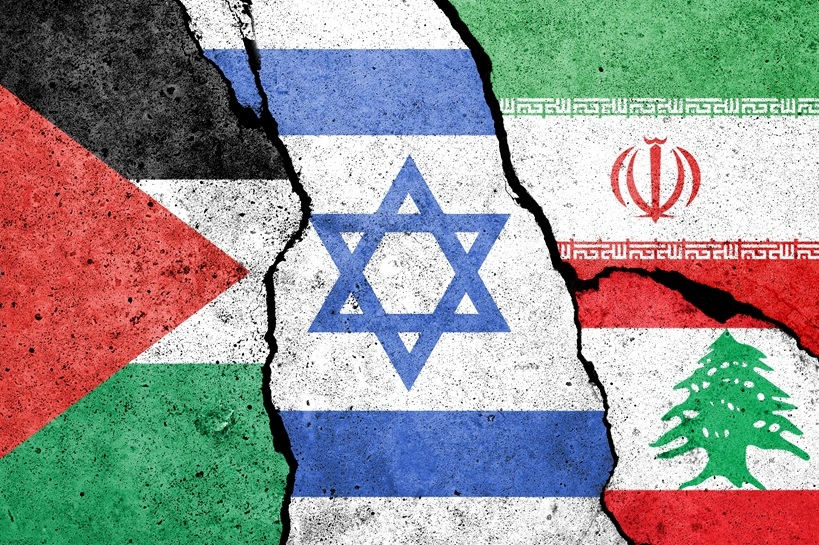

More than two years have passed since Hamas’s October 7, 2023 attack on Israel, yet its repercussions remain acutely felt. The retaliatory campaign launched by the Jewish state in the Gaza Strip gradually evolved into a “seven-front war,” officially designated the “War of Revival” in October 2025. Israel’s military achievements during this period have indeed been significant: the capabilities of Hamas and Hezbollah have been substantially degraded; the regime in Syria has been replaced by one that is relatively neutral toward Israel (although this is more an indirect consequence of the broader rebalancing of power in the region); and damage has been inflicted on Iran’s nuclear and missile programs. At the same time, despite numerous statements by the Israeli prime minister, it is difficult to speak of decisive victories. Hamas has survived and continues to re-establish its control over Gaza between the Mediterranean Sea and the “Yellow Line”; Hezbollah continues to conduct regular drone attacks against Israeli forces; and the Middle East as a whole remains in anticipation of another round of U.S.-Israeli-Iranian escalation.
From Restoring Deterrence to “Total Victory”
It would be inaccurate to suggest that the primacy of security and the use of military means to ensure it were not characteristic of Israel in the past. Since its establishment, Israel — politically isolated within the region and locked in confrontation with its Arab neighbors — has been compelled to rely on military instruments for its survival. Israeli leaders have often displayed skepticism toward international institutions. As the country’s first prime minister, David Ben-Gurion, famously remarked, “Only Jewish courage created the state, not the ‘Um-shmum'” (“Um” being the Hebrew abbreviation for the United Nations, or U.N.). At the same time, military achievements were generally coupled with a political and diplomatic strategy aimed at creating conditions for regional integration and the conclusion of lasting peace agreements. This was particularly evident in the signing of the peace treaty with Egypt in 1979 and during the Israeli-Palestinian Oslo Process, which in the 1990s was widely regarded as both successful and promising. The Abraham Accords likewise reflected Israel’s intention to integrate into the regional order as a partner valued not only for its military capabilities, but also for its technological achievements.
Since October 7, 2023, the course of Israel’s military-political activity has changed in significant ways. The objective of regional integration has not disappeared, but the path toward it has increasingly been paved through the demonstration and use of military power. These have come to be viewed not merely as an important component of Israel’s security strategy, but as the dominant element of the country’s broader regional posture. The principle of deterrence has given way to a proactive strategy centered on the preemptive neutralization of threats. Anti-Israel rhetoric has also come to be perceived differently. Whereas such rhetoric was not always previously interpreted as evidence of an adversary’s practical intentions, both stated and perceived threats are now increasingly treated as real and actionable.
There were, of course, compelling reasons behind this shift. Israel’s forceful response to the October 7 attack can be explained in large part by the profound trauma it inflicted on Israeli society. The loss of a sense of security created a pressing need to restore deterrence as a guiding principle — one that could compensate for the vulnerability exposed by the attack and help prevent similar actions by other hostile actors.
However, this approach gradually transformed into a paradigm of “total victory” over Hamas, driven in large part by political reasons. After the country’s leadership failed to prevent the Islamist group’s attack, the governing establishment as a whole — and Prime Minister Benjamin Netanyahu in particular — sought to reinterpret the events of recent years. Unwilling to acknowledge his own responsibility for what had occurred, Netanyahu created a “victory” narrative in response to mounting criticism. Yet following the ceasefire reached in the fall of 2025, only one of the three objectives originally set out under Operation Iron Swords was fully achieved: the return of all hostages, both living and deceased. The other two — the destruction of Hamas’s military and administrative capabilities and the elimination of the threat emanating from the Gaza Strip — were accomplished only partially and at the tactical level.
More broadly, forceful measures proved only of limited effectiveness in achieving the stated objectives. Even the release of most of the hostages, while facilitated by sustained military and humanitarian pressure on the Gaza Strip, was ultimately secured through negotiations. The highest level of security for residents of northern Israel — the fourth objective of Operation Iron Swords, pursued through Operation Northern Arrows against Hezbollah — was achieved during the ceasefire that remained in effect from late November 2024 until early March 2025, despite repeated violations.
The ceasefire was concluded following Israel’s operation on Lebanese territory and subsequent negotiations between Israel and Lebanon (with Hezbollah’s consent), mediated by the United States and France.
The large-scale objectives of the anti-Iranian operations have likewise not yet been achieved through military means. In June 2025, the officially stated goals of Operation Rising Lion were the “neutralization of the existential and immediate threat posed by Iran’s nuclear and ballistic missile programs, as well as its other military activities directed against Israel.” Yet by the winter of 2026, after declarations that these objectives had been successfully met, Israel and the United States launched the joint operation Roaring Lion, which pursued largely similar aims: to “prevent Iran from developing nuclear weapons and ballistic missiles that could threaten Israel, the United States, and the entire world,” and to “create conditions under which the Iranian people could remove the brutal tyrannical regime that has ruled them for nearly half a century.” At this stage, there remains considerable uncertainty regarding the strategic effectiveness of the second round of Iranian-Israeli confrontation, even as its tactical successes are widely acknowledged. The campaign is generally perceived as interrupted rather than concluded. Its resumption would once again carry risks of destabilizing a significant part of the region. Moreover, reliance on military means alone to halt Iran’s nuclear program could produce the opposite effect in many respects.
The Risks of a “Peace Through Strength” Approach
The Israeli leadership interprets military successes as a means of securing the country’s integration into the region and achieving “peace through strength.” Benjamin Netanyahu also positions Israel as a regional power capable of exerting significant influence over developments in the Middle East and even projecting power beyond the region. Echoing David Ben-Gurion in some respects, the current prime minister stated in March 2026 that he and his team were “forging additional alliances with countries in the region thanks to the tremendous strength they have built, thanks to the extraordinary heroism of Israeli officers and soldiers, and thanks to the resilience of Israel’s citizens.”
However, this approach carries significant risks. While the ongoing wars do indeed demonstrate the extraordinary capabilities of Israel’s military and intelligence services, battlefield successes have not translated into political gains. Moreover, their humanitarian costs continue to rise. The presence of Israeli forces in parts of southern Lebanon and Syria, justified on security grounds, may only contribute to further alienating the populations of the Arab republics and diminish the prospects for meaningful political dialogue. The pursuit of “permanent security” risks evolving into an alternative mechanism for managing conflicts rather than resolving them, thereby creating a new status quo that is fundamentally unsustainable over the long term.
At the same time, Israel is increasingly perceived in the region as a partially destabilizing factor. One of the most shocking developments for the Arab states of the Persian Gulf was likely the Israeli Air Force strike on a Hamas headquarters in Qatar. Although the practice of targeted “eliminations” has long been a feature of Israeli security policy, conducting airstrikes against countries not directly involved in hostilities has not traditionally been characteristic of the Jewish state. Israel’s proactive approach to neutralizing external threats may therefore be viewed by its partners and neighbors more as a source of risk than as an advantage. It does little to promote long-term stability in the Middle East and, consequently, creates obstacles to sustainable economic growth and regional connectivity projects, which rank among the key priorities of the Gulf monarchies. “Normalization through strength,” therefore, may prove to be a less effective strategy than its proponents assume.
Perceptions of external threats are broadly shared across the Israeli political spectrum. The distinguishing feature of the current governing coalition, however — owing to the presence of far-right parties — is not only its ethically controversial rhetoric, but also its reluctance to demonstrate diplomatic flexibility or make politically unpopular decisions. As a result, the continued tenure of the current government is already imposing significant political costs on Israel. The radical rhetoric and actions of ministers in Benjamin Netanyahu’s cabinet are provoking increasingly sharp international criticism.
The hardline positions of some members of the Israeli cabinet have thus far prevented the country from formulating a clear and internationally acceptable strategy toward the Gaza Strip, as any workable plan would require relinquishing control over the enclave’s territory. At the same time, Israel has little interest in assuming long-term responsibility for governing the Palestinian territories.
Concerns about the inability of Lebanese state institutions to disarm Hezbollah, the continued Israeli control over the “buffer zone” in southern Lebanon (a concern that applies to Syria as well), and the expansionist rhetoric of figures on the political right may hinder the conclusion of potentially productive arrangements with the Lebanese authorities. Continued military pressure on Iran, meanwhile, risks only reinforcing the Islamic Republic’s conviction that it must develop more effective means of deterring external attacks rather than pursue compromise.
Public Opinion
While most Israelis have no objection to the use of military means to ensure the country’s security, they do not always share the optimism reflected in the public statements of Israeli officials. Only around one-third of Israeli citizens expect that the 2026 operation in Lebanon will be able to guarantee long-term stability along the border. The operation against Iran in June 2025 was viewed by Israelis as considerably more successful than the 2026 campaign. While nearly two-thirds of respondents (62%) expressed satisfaction with the outcome of the former, fewer than half (37%) did so regarding the latter. Only about one-third (34%) believed that Israel’s security had improved following Operation Roaring Lion. At the same time, public support for the second campaign at its outset was even higher than it had been in June 2025 — 80% compared to 73%. These high expectations, however, ultimately gave way to disappointment over what many perceived as a premature ceasefire.
Perceptions of military force as the primary means of ensuring Israel’s security are also evolving. Whereas as recently as the spring of 2024, around 40% of respondents viewed it as the most effective tool in the short term, by April 2026 the share of those holding this view had fallen to less than 30%. Over the same period, the proportion of respondents who regarded diplomacy as the more effective approach increased from nearly 20% to 30%. There is also growing recognition that, in the long run, it is the combination of these two instruments, rather than military force alone, that is most likely to produce meaningful results.
***
Since the fall of 2023, securitization has assumed an even more prominent place in Israel’s foreign policy. The October 7 attack led to a fundamental shift in threat perceptions and responses to them, contributing to the elevation of military means of ensuring security into an overriding imperative. Robust, and often preemptive, responses to external challenges have become all-encompassing, potentially creating conditions for the preservation and intensification of conflicts rather than their resolution.
Although Israelis generally support the methods by which the country confronts its adversaries, they are increasingly reluctant to view the ongoing campaigns as effective. Growing public fatigue with wars whose outcomes are perceived as yielding ever more limited results significantly increases the political risks associated with decisions to launch any new military operations.
The foreign policy costs of such military activism are also rising. International pressure continues to mount, while the Arab states of the region are unlikely to fully appreciate Israel’s military successes unless they are translated into political gains. The consistent demonstration of military strength may prove effective as a deterrent, but it does not necessarily contribute to the development of new partnerships. As long as the region remains in anticipation of another escalation, processes of regional integration risk remaining frozen indefinitely.