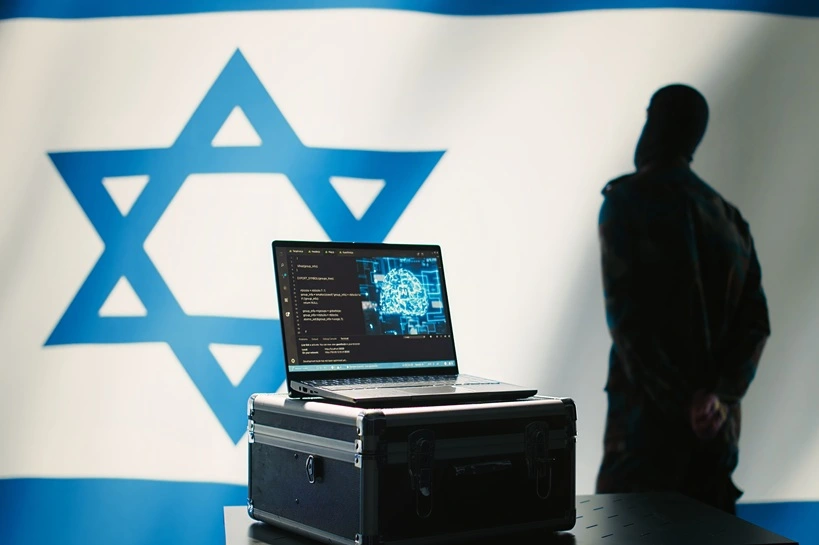

Brief Background: Israeli Espionage in the United States
U.S. counterintelligence officials have consistently ranked Israeli espionage among the most active on American soil, operating alongside major global powers like China and Russia. This activity dates back to the 1960s and 70s, when Israel’s drive to secure a technological and nuclear edge led to the creation of the Scientific Liaison Bureau (LAKAM), tasked with acquiring technical data from the United States.
While the Mossad and the CIA have historically maintained a cooperation agreement, this has not precluded persistent friction. The 1985 arrest of Jonathan Pollard remains the most damaging public instance of this dynamic. In the post-Cold War and post-9/11 eras, Israel has remained a focus for U.S. counterintelligence; notably, a 1996 CIA report explicitly identified Israel as being “extensively engaged in espionage” against U.S. interests.
In the 2010s, evidence surfaced regarding Israeli eavesdropping on confidential Iran nuclear negotiations, while the 2020s brought scrutiny regarding alleged connections between the late Jeffrey Epstein and Israeli intelligence. Historically, Israeli political espionage has prioritized gaining strategic leverage — monitoring U.S. negotiating positions and influencing policymaking processes — rather than merely gathering technical or military data. Although Israeli officials have occasionally asserted that they ceased spying on the U.S., in practice these operations have merely evolved to become more circumspect.
The Pentagon’s “Critical” Assessment
As I have previously analyzed, the 100-day conflict involving the U.S.-Israel axis against Iran has triggered a massive reconfiguration of the Middle East’s power structure (Calderon, 2026). While this alignment has sought to establish regional superiority, it has also driven Israel to pursue its own strategic interests more assertively — even within the institutions of its closest ally, the United States.
We are now witnessing a significant escalation in this long-standing tension, exacerbated by the war’s outcome. In recent weeks, the Defense Intelligence Agency (DIA) has raised the threat level of Israeli espionage to “critical” — the highest possible designation — driven by reports that these operations have become significantly more aggressive.
The Pentagon’s decision was formalized in a recent internal assessment by the DIA. According to reports from NBC News (2026), citing current and former U.S. officials, the agency determined that Israel’s capacity for both human and technical intelligence collection against U.S. interests has reached an unprecedented peak. This shift is not merely bureaucratic; the seven-page assessment outlines growing concerns that Israeli intelligence has become increasingly focused on monitoring internal American deliberations regarding the war with Iran. Intelligence sources suggest that this surveillance has specifically targeted high-ranking policy figures involved in the administration’s Middle East strategy, signaling a breach of trust that has alarmed the U.S. defense establishment.
From Washington’s perspective, the concern is not merely that Israel is collecting intelligence, but that it may be seeking privileged insight into U.S. deliberations at a moment when the two governments are pursuing increasingly divergent strategies toward Iran and the future regional order. While the two nations have operated in close coordination since the conflict began, their strategic objectives have increasingly diverged, particularly regarding the war’s outcome, which now impacts the Trump administration’s public standing.
The divide has become strikingly palpable in recent weeks. President Trump administration has been actively pushing for a de-escalation of regional hostilities, prioritizing a diplomatic path with Iran to stabilize the region and mitigate economic disruptions. In contrast, Netanyahu’s government has pursued a hardline military offensive, frequently disregarding U.S. requests for restraint.
Reports indicate that President Trump, clearly frustrated by Netanyahu’s refusal to de-escalate, berated the Prime Minister in blunt terms. During an expletive-filled exchange, Trump reportedly called Netanyahu “crazy,” stated that without U.S. support he would be in prison, and accused him of jeopardizing a diplomatic framework that could fundamentally reshape the region. The U.S. position is strategic and absolute: the White House views a cessation of hostilities in Lebanon as a mandatory prerequisite for advancing the broader negotiations with Iran (NPR/PBS, 2026).
Strategic Consequences of Espionage Allegations
The decision by the Defense Intelligence Agency (DIA) to elevate the Israeli espionage threat to its highest counterintelligence level carries implications that extend far beyond intelligence collection. It reflects a growing deterioration of strategic trust at a time when Washington and Jerusalem appeared increasingly divided over the desired outcome of the regional conflict.
First, the allegations risk eroding the foundation of intelligence cooperation between the two allies. Reports that surveillance activities targeted U.S. diplomats, military personnel, and senior officials involved in Middle East policy have heightened concerns within the Pentagon that sensitive deliberations may no longer be secure. As a result, American intelligence agencies may adopt stricter compartmentalization measures, increase counterintelligence protocols, and reduce the circulation of highly classified information, even among longstanding partners. Such measures could inevitably complicate the level of coordination that has traditionally characterized the U.S.-Israel security relationship.
The espionage allegations expose fundamental differences in the strategic objectives pursued by both governments. While the Trump administration has increasingly favored a controlled diplomatic de-escalation aimed at preventing a wider regional war and preserving economic stability, Israel has continued to advocate for sustained military pressure designed to permanently degrade Iran’s military and nuclear capabilities. Intelligence collection directed at American policymakers therefore appears not merely defensive, but potentially intended to anticipate Washington’s negotiating position and influence its future decisions.
Access to confidential U.S. negotiating positions could significantly affect ongoing diplomatic efforts with Tehran. If Israeli intelligence succeeds in identifying Washington’s internal “red lines,” acceptable concessions, or draft negotiating frameworks before they are formally presented, Israeli leaders would be better positioned to publicly challenge, politically pressure, or operationally undermine any agreement they perceive as insufficient. Such a dynamic would weaken the confidentiality that successful diplomacy requires and could ultimately make future negotiations considerably more difficult to sustain.
Taken together, these developments suggest that the current dispute is not simply another episode of allied espionage. Rather, it reflects a broader strategic divergence in which intelligence has become an instrument for managing disagreements between partners whose long-term regional objectives are no longer fully aligned.
This strategic divergence also provides important context for understanding the timing of the recent espionage concerns. If Washington is increasingly pursuing diplomatic initiatives with Tehran while preserving greater diplomatic discretion, Israeli decision-makers would have a strong incentive to obtain advance insight into U.S. negotiating positions, potential concessions, and diplomatic sequencing. As Elliott Abrams, Senior Fellow for Middle Eastern Studies at the Council on Foreign Relations (CFR), argues, “Sidelining an ally in negotiations affecting its vital interests can, at times, be useful or even necessary for the United States. It may greatly disadvantage that ally, or it can provide it — and the United States — distance that can allow for greater freedom of action.” If this assessment is correct, the Pentagon’s heightened counterintelligence concerns may reflect not only a traditional espionage issue, but also an alliance adapting to a new diplomatic reality.
The U.S.-Iran Peace Process
Against this backdrop, Washington and Tehran have begun transitioning from preliminary understandings to a more structured diplomatic process. Following an extensive opening round of negotiations in Geneva, Switzerland, facilitated by international mediators, including Qatar and Pakistan, both delegations agreed not to a final peace settlement, but rather to a 60-day negotiating framework designed to prevent further escalation while comprehensive talks continue. Mediators described the initial session as having achieved “encouraging progress,” emphasizing that the objective was not to immediately resolve decades of hostility but to create sufficient political space for diplomacy to proceed under a defined timetable (France24, 2026).
Rather than producing a binding peace agreement, the negotiations resulted in a reported 14-point Memorandum of Understanding (MOU), supported by approximately four technical working groups tasked with addressing the principal sources of regional instability. These technical tracks focus on Iran’s nuclear program, the gradual easing of sanctions, regional security dynamics involving Iranian-backed armed groups, and maritime security in the Persian Gulf. Together, they constitute the most comprehensive diplomatic architecture established between Washington and Tehran since the current conflict began.
Two security fronts have emerged as particularly critical to the success of the process. The first is southern Lebanon, where Israeli military operations continue despite Washington’s efforts to consolidate a broader regional ceasefire. Continued Israeli offensives risk undermining confidence in the negotiations by creating new military realities while diplomatic discussions remain underway. The second concerns the Strait of Hormuz, where negotiators have reportedly achieved greater convergence following the U.S. decision to lift key elements of the maritime blockade imposed during the conflict. Discussions have since focused on guaranteeing freedom of commercial navigation, establishing maritime deconfliction mechanisms, and preventing incidents that could disrupt one of the world’s most strategically important energy corridors. Stabilizing these two theaters has become an essential prerequisite for preserving the broader negotiating framework.
The negotiations therefore represent what could best be described as diplomacy under the clock. Rather than declaring peace, Washington and Tehran have effectively agreed to purchase time for diplomacy before developments on the battlefield once again dictate the political agenda. Whether the process ultimately succeeds will depend less on the wording of the memorandum than on the ability of all regional actors to refrain from actions capable of collapsing the fragile diplomatic window.
Perhaps the most encouraging diplomatic development has emerged on the Lebanese front, one of the conflict’s most sensitive theaters. While Israeli military operations have continued throughout the negotiation process, Washington has simultaneously pursued a parallel diplomatic track involving Israeli and Lebanese officials. Following several rounds of discussions held separately in Washington, the United States announced on 26 June a preliminary framework agreement between Israel and Lebanon aimed at reducing hostilities, strengthening security coordination, and establishing mechanisms to prevent renewed escalation along the Blue Line (Al Jazeera, 2026).
Although the announcement does not constitute a final settlement, it represents an important confidence-building measure that complements the broader U.S.-Iran negotiations. By seeking to stabilize one of the region’s most volatile fronts independently from the Geneva talks, Washington appears to be reducing the number of active flashpoints that could derail the wider diplomatic process. For now, however, the framework should not be understood as a peace agreement, but rather as a diplomatic opportunity whose success will ultimately depend on whether developments on the battlefield remain subordinate to the negotiating table. Whether this fragile momentum evolves into a lasting regional settlement will become clearer over the coming sixty days.
However, events unfolding on 8 July have demonstrated just how precarious this diplomatic momentum remains. Following renewed attacks on commercial shipping in the Strait of Hormuz, the United States launched another round of strikes against Iranian military targets, prompting Iranian retaliation against U.S. facilities in the Gulf. At the NATO Summit, President Donald Trump declared that, in his view, the interim Memorandum of Understanding was effectively “over,” while Iranian officials simultaneously argued that repeated military actions and renewed sanctions had rendered the agreement ineffective. Although diplomatic channels have not been formally abandoned, the ceasefire now appears increasingly fragile, illustrating that the Memorandum was never intended as a final peace settlement but rather as a mechanism to prevent uncontrolled escalation. Whether negotiations can survive this renewed cycle of military confrontation will ultimately determine whether the MOU becomes the foundation for a future regional security framework or merely another failed attempt at crisis management.
References