

The Anatomy of Escalation
By mid-February 2026, intelligence reports from U.S. agencies confirmed Tehran had accelerated uranium enrichment to 60% purity. This ‘weapons-grade’ material represented the crossing of a final red line for the United States and Israel. The ‘breakout time’ had vanished, creating a ‘now or never’ ultimatum to intervene before Iran reached nuclear status.
However, this nuclear escalation collided with a regime in a domestic crisis. Years of economic asphyxiation and record-breaking inflation had pushed the Iranian economy to the brink of collapse, triggering a new wave of violent social protests across the country. Facing a population demanding systemic change, the regime’s nuclear defiance became a desperate gamble to maintain its grip on power amidst internal chaos.
As the conflict in Iran reaches its 60-day mark, the Middle East stands at a historic crossroads. What began in late February as a targeted campaign by the United States to neutralize nuclear capabilities has rapidly spiraled into a complex multi-front war involving global powers and regional proxies. This article examines the critical evolution of hostilities, from the initial ‘Operation Epic Fury’ and ‘Operation Roaring Lion’. To the current fragile truce, analyzing how sixty days of combat have reshaped the global energy market and the security reality on the Middle East.
While the initial coordinated strikes by the United States and Jerusalem yielded successful early results, neutralizing key facilities, killing of leaders and demonstrating overwhelming air superiority, the tide quickly shifted. The ‘Axis of Resistance’ responded with a resilience that shattered the strategic surprise of the Persian Gulf. Through coordinated drone swarms hitting logistics hubs in Jordan and the high-profile targeting of naval destroyers, Tehran demonstrated that it no longer feared American retaliation.
This systemic collapse of deterrence signaled to the White House that diplomatic warnings and military actions had lost their teeth. Despite the tactical success of ‘Operation Epic Fury’ on February 28—viewed by the Pentagon as the only tool left to restore a broken balance of power—Iranian capabilities began to surface with unexpected intensity. These counter-strikes inflicted significant damage on U.S. regional bases, creating a high-impact disruption that forced Washington to face the reality of a prolonged and costly military.
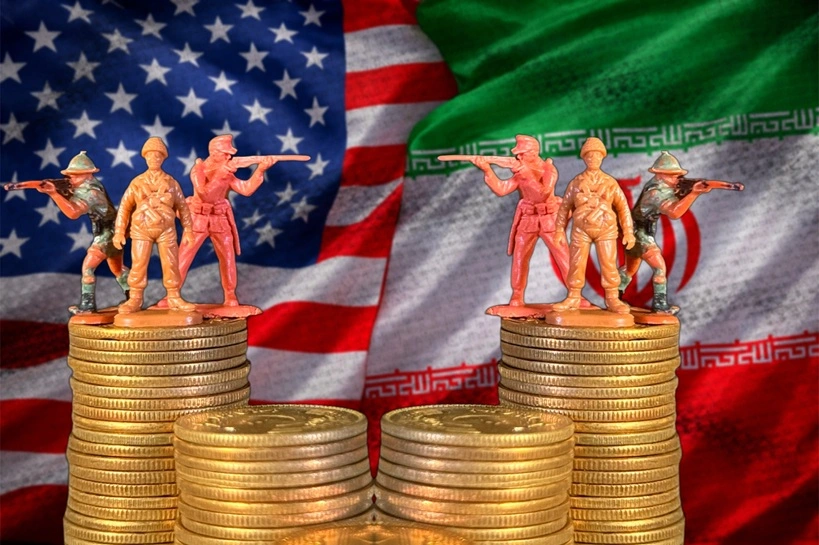
These counter-strikes inflicted significant damage on U.S. regional assets, creating a high-impact disruption that forced Washington to face the reality of a prolonged and costly military stalemate. According to recent data from CENTCOM and the Center for Strategic and International Studies (CSIS), the U.S. military offensive in Iran has cost an estimated $26.74 billion as of March 28, 2026. The financial scale of this month-long operation is historic, as the sheer volume of munitions and defensive measures required to sustain the front has strained current defense budgets across several critical operational categories.
This expenditure includes approximately $10 billion spent on air defense interceptors to counter Iranian drone swarms and ballistic missile volleys, while over $9.42 billion has been attributed to the execution of more than 10,000 offensive strikes conducted against regional targets. Furthermore, the military has utilized roughly $3.06 billion for the launch of over 800 Tomahawk cruise missiles and incurred an estimated $4 billion in combat losses and urgent repairs for regional installations. Strategic aviation costs have reached approximately $266 million, covering over 30 heavy bomber sorties involving B-1, B-52, and B-2 units. As noted by reports from Anadolu Agency (2026), the rapid depletion of high-end interceptors and the astronomical daily burn rate of the campaign have raised urgent questions in Congress regarding the sustainability of the current U.S. posture without a significant supplemental defense appropriation.
While the official narrative framed Operation Epic Fury as a necessary response to nuclear brinkmanship, the view from within the U.S. National Security Council (NSC) was far from unanimous. Deep within the intelligence community, senior analysts warned that a direct military confrontation with Tehran would not be a contained surgical strike, but rather the spark for a regional conflagration that the United States was not fully prepared to manage.
According to internal sources, the CIA and the Pentagon held significant reservations throughout early February. Intelligence assessments suggested that war could have been addressed through asymmetric means rather than open warfare. The primary fear was a “total regional spillover”—a scenario where U.S. forces would be bogged down in a multi-front war involving Lebanon, Syria, Iraq, and Yemen and gulf states simultaneously. This internal friction mirrors the strategic warnings long issued by the International Crisis Group (2024), which has consistently argued that direct kinetic action against Iran without a robust regional diplomatic framework inevitably triggers a “cascade of unintended escalations” across the Middle East.
Despite these tactical doubts, the political tide in Washington turned, driven largely by relentless pressure from Jerusalem. It has become increasingly evident that the Israeli government leveraged its strategic alliance to push the U.S. into a conflict that served a broader ideological agenda. This dynamic aligns with the structural critique presented by Mearsheimer and Walt (2007), who contend that the U.S.-Israel relationship often leads Washington to prioritize an ally’s regional objectives over its own global strategic stability, even when such actions risk a massive regional war.
For the current Israeli leadership, the war against Iran is not merely about nuclear neutralization; it is seen as the ultimate opportunity to reshape the Middle East. Analysts point to the resurgence of the “Greater Israel” project—a colonial-nationalist ambition to consolidate control over regional territories and eliminate any sovereign resistance. By drawing the United States into a direct war with Tehran, Israel effectively outsourced the heavy lifting of its regional expansion strategy, forcing Washington to provide the military shield necessary for its territorial goals.
Furthermore, the theater of war has expanded to threaten the very stability of the Gulf monarchies. Iran’s retaliation was not limited to military targets; it extended to critical infrastructure within the Gulf States, targeting desalination plants and energy facilities to fracture the regional coalition supporting Washington. These attacks have sent shockwaves through the Arab capitals, creating a climate of insecurity that challenges the long-term viability of the U.S. security umbrella in the region.
Ultimately, the White House’s decision to ignore its own intelligence experts suggests a shift in the hierarchy of American foreign policy. In this 60-day conflict, the United States appears less like a master of its own destiny and more like a superpower being steered into a regional war by its most demanding ally. The U.S clearly seems to go into this war in Iran with not too much clarity.
Tactical Supremacy vs The Rhetoric of Resistance
The initial weeks of the campaign yielded significant tactical victories for the U.S.-Israeli coalition, primarily through a systematic campaign of high-value targeting. The elimination of Supreme Leader Ali Khamenei, alongside more than a dozen top-tier commanders of the Islamic Revolutionary Guard Corps (IRGC), effectively decapitated the regime’s traditional command structure. For Washington and Jerusalem, these were not merely assassinations but a deliberate effort to dismantle the state’s ability to coordinate a centralized defense.
However, as the conflict entered its second month, the nature of the war shifted from a lightning strike to a grueling war of attrition. The objective moved toward the total erosion of Iranian military capabilities, yet the Pentagon found itself walking a dangerous tightrope. U.S. strategists began to realize that destruction of Iran’s critical energy infrastructure would be a double-edged sword. Attacking certain energy hubs and refineries threatened to trigger a catastrophic spike in global oil prices, potentially crippling the Western economy. Consequently, military operations were forced into a restrictive pattern of “surgical targeting,” leaving large portions of the Iranian defensive apparatus intact to avoid an irreversible global energy shock.
Despite the internal chaos caused by the loss of its leadership, Iran has utilized the IRGC’s decentralized structure to maintain a defiant posture. Rather than retreating, the remaining Iranian leadership has leveraged the conflict to reinforce the narrative of the “Axis of Resistance.” In recent communiqués, Tehran reaffirmed the enduring strength of the IRGC, issuing a stern warning to the West.
The official Iranian stance has remained unyielding, declaring that the United States is “no longer in a position to dictate its policy to independent nations.” From Tehran’s perspective, the era of American hegemony in the Middle East has ended, with officials adding that Washington must “accept that it must abandon its illegal and irrational demands.” This rhetorical defiance, backed by persistent asymmetric strikes across the region, has turned a perceived military victory into a political stalemate, where the U.S. occupies the battlefield but can no longer enforce its will.
This stalemate is further complicated by regional opportunistic shifts; Israeli military operations in Lebanon have not ceased, with heavy airstrikes continuing to target Beirut. This persistent offensive suggests that Jerusalem is leveraging Iran’s internal distraction to accelerate its strategic expansion into Lebanese territory, an operation that has already created a massive humanitarian crisis with approximately two million people displaced the same as Gaza. The continuation of these strikes despite the broader regional truce highlights the fracturing of the conflict into localized wars of territorial consolidation, where the original nuclear objectives have been superseded by older, deep-seated regional ambitions.
Furthermore, Tehran has effectively eroded American conventional dominance through a high-stakes strategy of ‘cost-imposition.’ As highlighted in recent reports, Iran has deployed drones costing as little as $20,000, forcing the U.S. to expend multi-million-dollar interceptor missiles to maintain security. This ‘war of the wallet’ turns American military strength into a financial burden, where the cost of defense far outpaces the cost of aggression. This tactical resilience is bolstered by a clandestine intelligence bridge with Moscow and Beijing. While avoiding direct military aid, Russia and China have reportedly provided Tehran with high-resolution satellite reconnaissance and electronic warfare data. This ‘silent’ support has enhanced Iran’s situational awareness, allowing it to sustain a high-impact campaign that offsets its conventional inferiority.
The Crisis at the Strait of Hormuz
As the military conflict reaches a stalemate on land, the battlefield has shifted to the world’s most critical maritime chokepoint: the Strait of Hormuz. Fulfilling its long-standing strategic threat, Iran successfully implemented a blockade of the strait, through which approximately 20% of the world’s total oil consumption and a significant portion of Liquefied Natural Gas (LNG) pass daily.
The U.S. Navy’s response has been massive, marking its largest naval offensive since the 2003 invasion of Iraq. Despite the deployment of advanced minesweepers and carrier strike groups, Iran’s use of “swarm” tactics—utilizing hundreds of fast-attack boats, sea mines, and shore-based anti-ship missiles—has made the strait a “kill zone” for commercial tankers. The inability of a superpower fleet to fully secure this 21-mile-wide passage has exposed a profound vulnerability to global maritime security.
The economic fallout has been immediate and devastating. The “strangulation” of the oil supply has pushed Brent Crude prices to approximately $126 per barrel, triggering a surge in gasoline prices that has fueled inflation and political unrest across the globe. As energy markets suffer, a tectonic shift in logistics is occurring new, more expensive overland routes are being explored, and alternative oil producers are desperately trying to fill the massive vacuum in global demand.
This crisis has also forced the hand of global powers that were previously on the sidelines. China, as the world’s largest oil importer, has moved from a stance of quiet observation to one of urgent mediation. Beijing has officially advocated for an “immediate and unconditional reopening” of the strait, emphasizing that the waterway is an international interest zone that cannot be held hostage by regional belligerents.
This economic paralysis validates the severity of maritime disruptions on global stability. According to the International Energy Agency (2024), disruptions in the Strait of Hormuz do not merely affect prices but threaten the “physical energy security” of entire regions, forcing a chaotic reconfiguration of global trade. Furthermore, the International Monetary Fund (2024) has warned that a sustained oil shock of this magnitude could shave significant points off global GDP growth, pushing developed economies into a period of stagflation that undermines the very domestic stability the U.S. sought to protect by entering the conflict.
Despite these immense pressures and the alternating cycles of limited openings and renewed blockades, there is no clarity on when a full, natural resumption of trade will occur. It is highly probable that the strait will remain effectively closed for the foreseeable future, as deep-seated uncertainty and the constant threat of renewed hostilities between the warring parties prevent any return to normalcy. Instead of free passage, the world is facing the prospect of a heavily militarized corridor. In this scenario, commercial transit may only be possible under a restrictive system of maritime “tolls” or high-risk tolls, with the waterway remaining under the fragmented control of either U.S. naval escorts or Iranian coastal surveillance, ensuring that the global economy remains tethered to the volatile pulse of a frozen war.
At the same time, this maritime paralysis has accelerated a shift in the global geopolitical architecture. Global actors, specifically Russia and China, are actively pushing for the development of alternative trade routes, including overland Eurasian corridors and the Northern Sea Route, to bypass the volatile Middle Eastern chokepoints. This fragmentation of traditional trade is further evidenced by a landmark shift within the regional energy bloc; the United Arab Emirates, seeking greater strategic autonomy and a direct response to the shifting market dynamics, has officially requested to withdraw from OPEC. These developments suggest that the conflict has not only disrupted the Strait of Hormuz but has triggered a permanent reconfiguration of global energy alliances and logistics.
Islamabad Initiative
The Islamabad Talks, launched under the Islamabad Initiative, represented the most significant diplomatic effort to de-escalate the 60-day conflict. Facilitated by Pakistan, these high-level negotiations sought to bridge the gap between Washington and the remnants of the Iranian leadership during a period of extreme regional volatility. According to reports from Dawn Today (2026), the initiative was viewed as a “mediation in a vacuum,” providing a critical but fragile window for diplomacy amidst a fragmented Iranian power structure.
Despite the gravity of the situation, these 21 hours of intense, face-to-face negotiations and a second round of talks facilitated by Pakistan and involving U.S. Vice President JD Vance and Iranian Foreign Minister Abbas Araghchi and other envoys such as Jared Kushner and Steve Witkoff succeeded in stabilizing a temporary ceasefire but ultimately collapsed without a formal peace agreement. The primary obstacle remained the inability of both sides to reach a consensus on core “sticking points”.
By late April, the diplomatic process stalled further when President Trump canceled a planned follow-up visit by envoys Jared Kushner and Steve Witkoff, citing inadequate proposals and a lack of satisfaction with Tehran’s latest terms. While the ceasefire has been extended indefinitely, providing a momentary and deceptive calm, the underlying situation remains volatile. Both sides appear to be utilizing this strategic intermission to reorganize and re-arm, with Israeli officials suggesting they are prepared to resume operations and Iranian forces warning of a response to any renewed aggression.
As the conflict reaches a critical crossroads, the internal pressure within the United States is intensifying. By May 1, 2026, President Trump faced the legal threshold of the War Powers Resolution, which mandates the termination of military action after 60 days without explicit Congressional authorization. In response, the administration and Secretary of Defense Pete Hegseth argued that the current ceasefire effectively “paused” the clock because active hostilities had been “terminated,” a claim that has sparked fierce debate on Capitol Hill (The Guardian, 2026).
During high-stakes testimony before the Senate Armed Services Committee, Hegseth defended the mission while facing intense questioning regarding its massive economic and operational toll (PBS NewsHour, 2026). Official reports indicate that the war has already cost the U.S. an estimated $25 billion to $61 billion, with a significant portion spent on advanced munitions that have depleted inventories to levels threatening global readiness (PBS NewsHour, 2026). Specifically, the heavy use of over 1,000 Tomahawk and 1,200 Patriot missiles has forced the Pentagon to redirect assets from other regions to sustain the effort.
Despite these rising costs and the legal deadline, President Trump has cooled on the latest peace proposals, labeling them “inadequate” as Iran remains inflexible on its nuclear program. As noted by Dawn Today (2026), the situation has devolved into a period of strategic exhaustion where, despite the immense operational and political burden, a permanent breakthrough remains elusive. This fragile pause highlights a region in suspension, where the original nuclear objectives have stalled and the expectation of renewed hostilities continues to overshadow the hope for a lasting peace.
References

By referring Israel as Jerusalem in his article the writer, Sebastián Calderón Céspedes, is also supporting the colonization of Palestine by Israel