
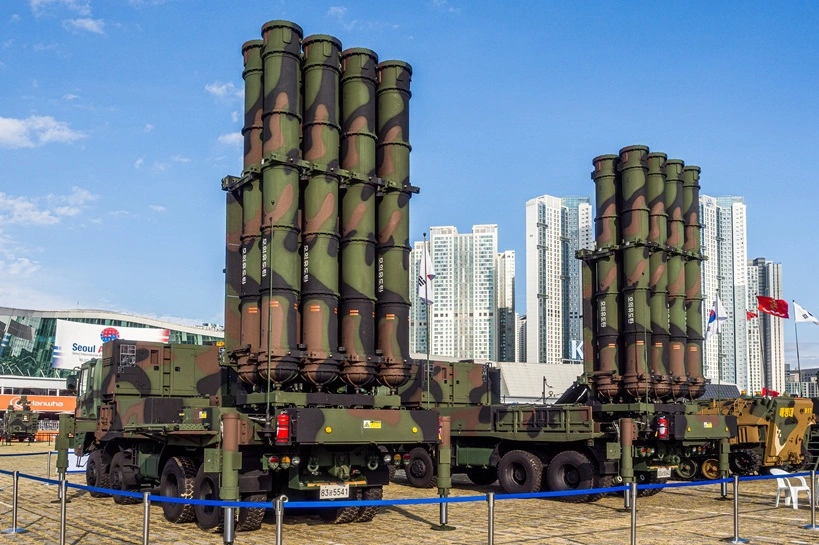

1. Introduction: Strategic Importance of Missiles
• Role of Missiles in Modern Warfare
In contemporary warfare, missiles have established themselves as more than mere weapons; they have become strategic gamechangers. The dramatic advancement of precision strike capabilities has fundamentally altered the conduct of war, enabling military targets to be hit with centimeter-level accuracy over distances ranging from tens to hundreds of kilometers. The combination of stealth technology and precision guidance systems allows forces to bypass enemy defenses and deliver decisive strikes. These capabilities are faster and more efficient than traditional power projection methods, while relatively minimizing political and military risks, making them a central element of modern military doctrine.
From a deterrent perspective, missiles constitute a core pillar of national security. The post-World War II theory of nuclear deterrence, combined with missile technology, has made intercontinental ballistic missiles (ICBMs) and submarine-launched ballistic missiles (SLBMs) ultimate tools for ensuring national survival. By guaranteeing a retaliatory capability, they provide strategic stability by deterring preemptive attacks. Conventional missiles also serve as effective asymmetric power instruments for smaller states against major powers, offering superior range and strike power in territorial and air defense compared to coastal artillery or aircraft.
The status of missiles as strategic weapons derives from their capacity to influence the outcome of entire conflicts, beyond individual battles. By neutralizing high-value targets such as enemy C4I systems (Command, Control, Communications, Computers, and Intelligence), airbases, ports, and supply lines at an early stage, missiles can decisively shape the course of a war. Moreover, they allow for rapid responses to time-sensitive targets, enabling swift action against moving launchers or emerging threats such as terrorist groups.
• The Necessity of Missiles in the Korean Peninsula Security Environment
The Korean Peninsula represents one of the most densely militarized regions in the world, making missile capabilities essential for survival and security assurance. Due to geographic constraints, both South and North Korea have concentrated on developing short- and medium-range missiles capable of striking across the entire territory within extremely short timeframes. With Seoul and Pyongyang separated by merely 200 kilometers, the very limited time for early warning and interception systems demands parallel development of preemptive strike capabilities and active defense systems.
• Countering the North Korean Nuclear and Missile Threat
As a response to the North Korean nuclear and missile threat, South Korea’s missile capabilities are no longer optional but essential. North Korea possesses a variety of ballistic missiles (SCUD, Nodong, Musudan, Hwasong series) with differing ranges and has increasingly advanced systems, including solid-fuel missiles, slide-type reentry vehicles, and submarine-launched ballistic missiles (SLBMs) with improved survivability and penetration capabilities. With the growing likelihood of miniaturized nuclear weapons, South Korea must strengthen deterrence through precision strikes against critical targets. The Korean Air and Missile Defense (KAMD) system and the Kill Chain serve as core pillars to counter these threats; however, defense alone cannot achieve complete deterrence, making retaliatory strike capabilities essential.
• Balancing Military Power Among Neighboring States (China, Russia, Japan)
From the perspective of regional military balance, the development of South Korea’s missile capabilities is a strategic necessity. China has deployed large numbers of medium-range ballistic missiles (e.g., DF-21) and cruise missiles to exert pressure on the regional security environment. Russia has forward-deployed advanced systems such as the Iskander missiles in the Far East. Japan, shifting from fleet defense to land-attack capabilities, is pursuing long-range missile acquisition. Without missile capabilities, South Korea would face exposure to military pressure from neighboring states and risk losing strategic influence in the region. Reliance solely on U.S. extended deterrence may conflict with the goals of regaining wartime operational control and achieving autonomous national defense, necessitating precision, high-speed, and deception capabilities capable of penetrating advanced regional defense systems.
• Symbol of Autonomous Defense and Technological Sovereignty
Missile development in South Korea represents more than a mere enhancement of military capability; it stands as a symbol of national technological competence and sovereignty. Beginning with the introduction of Nike-Hawk missiles in the 1970s and culminating in the successful development of the Hyunmoo-1 short-range ballistic missile in the 1990s, South Korea laid the foundation for an independent missile technology base. Since then, successive systems, including the Hyunmoo-2, Hyunmoo-3, Hyunmoo-4, and Hyunmoo-5 series, have been successfully developed, accumulating independent capabilities in precision strikes, extended-range operations, high-speed delivery, and stealth technology. These achievements demonstrate the ability to overcome the constraints of the Missile Technology Control Regime (MTCR) through domestic innovation and the concentrated research and development efforts of the Agency for Defense Development (ADD) and South Korean defense industry companies.
From the perspective of autonomous defense, missile capabilities reduce dependence on external powers and ensure independent operational capability in wartime. Key elements enhancing warfighting sustainability include South Korea’s indigenous guidance systems capable of precision strikes under GPS-jamming conditions, satellite-based mid-course command technologies, and self-reliant solid-fuel technologies. Recently developed hypersonic cruise missiles and anti-submarine missiles have dramatically improved maritime defense capabilities, completing a strike system integrated with joint operational doctrines.
The concept of technological sovereignty is further illustrated by the positive feedback loop within the defense industrial ecosystem. Technologies developed in missile programs—including propellants, high-temperature materials, guidance and navigation systems, and electronic warfare capabilities—can be transferred to civilian sectors such as space launch vehicles, satellites, aerospace, and advanced materials industries. This creates a virtuous cycle benefiting both national security and economic development. Moreover, domestically developed weapon systems enjoy relative freedom from political constraints in international sales, contributing to the expansion of defense exports and enhancing the nation’s technological brand. The export success of South Korea’s Cheongung surface-to-air missile system and Haeseong cruise missile demonstrates the credibility of these technologies.
2. Types of Missiles
Before discussing missiles in detail, it is necessary to differentiate launch vehicles: missile, rocket, and shell.
Shell (Artillery Shell)
• Characteristics: It does not have its own propulsion; it relies on the explosive force of gunpowder inside the barrel.
• Limitations: Once fired, its trajectory cannot be adjusted for wind or other factors. (Although guided shells have been developed recently, traditional shells are inherently unguided.)
Rocket
• Characteristics: Equipped with its own engine (rocket motor) to fly independently, but lacks a “brain” (guidance system).
• Limitations: Flies with force in the aimed direction, but cannot correct its course if the target moves or the trajectory deviates.
Missile (Guided Missile)
• Characteristics: Combines the engine of a rocket with the destructive power exceeding that of a shell, and crucially, it includes a guidance system (computer + seeker).
• Strengths: Can adjust its flight path mid-course to pursue a moving target or correct for environmental factors like wind, ensuring high accuracy.
Missiles are generally categorized based on their flight trajectory and the launch and target locations.
2.1. Classification by Flight Trajectory
Ballistic Missile (BM):
A ballistic missile is propelled by a rocket engine to leave the atmosphere and then follows a free-fall trajectory, adjusting its path to strike the target. Ballistic missiles are extremely fast and highly destructive, but their predictable trajectory makes them vulnerable to interception.

Figure 1. Types and Operating Principles of Ballistic Missiles
Cruise Missile (CM):
Cruise missiles use a jet engine to maintain a constant altitude during flight. While slower than ballistic missiles, they can fly low to evade radar and alter their path, achieving very high precision.


Figure 2. Structure and Operating Principles of Cruise Missiles
Booster-Glide Missile (BG):
A booster-glide missile is first launched rapidly by a rocket to a high altitude, after which a separate glide vehicle detaches and glides within the atmosphere, changing direction to reach its target.

Figure 3. Operating Principles of Booster-Glide Missiles
2.2. Classification by Launch and Target Location
• Surface-to-Surface (S2S): Launched from the ground to strike ground targets (e.g., Hyunmoo series)
• Surface-to-Air (S2A): Launched from the ground to intercept airborne targets, such as enemy aircraft or missiles (e.g., Cheongung, L-SAM)
• Surface-to-Ship (S2Sh): Deployed along coastlines to attack approaching enemy ships (e.g., Haeseong-I)
• Air-to-Surface (A2S): Launched from aircraft to strike ground targets (e.g., Cheonryong)
• Air-to-Air (A2A): Launched from aircraft to attack enemy aircraft (under development)
• Air-to-Ship (A2Sh): Launched from aircraft to attack enemy ships (under development)
• Ship/Submarine-to-Surface (Sh/Su2S): Launched from ships or submarines to strike ground targets (e.g., Haeseong-II, III)
• Ship-to-Ship (Sh2Sh): Offensive capability to sink enemy vessels (e.g., Haeseong)
• Ship-to-Air (Sh2A): Defensive capability to intercept incoming missiles or aircraft (e.g., Haegung)
• Ship-to-Submarine (Sh2Su): Attack enemy submarines hidden underwater (e.g., Hong-Sang-Eo)
• Submarine-to-Surface (Su2S): Ballistic missiles launched from submarine vertical launch tubes (e.g., SLBM Hyunmoo-4.4) rise above the water and travel outside the atmosphere, or cruise missiles (e.g., SLCM Haeseong-III) emerge from the water and fly like a low-flying aircraft
• Submarine-to-Ship (Su2Sh): Fired underwater, surfacing to attack enemy ships (under development)
2.3. Areas Under Development or Requiring Enhancement
Air-to-Air Missile (A2A):
South Korea has relied entirely on U.S.-made missiles (Sidewinder, AMRAAM, etc.). Currently, indigenous short- and medium-range air-to-air missiles for the KF-21 fighter are under research and exploratory development.
Air-to-Ship Missile (A2Sh):
While South Korea’s ship-to-ship (Haeseong-I) technology is world-class, long-range air-launched anti-ship missiles are currently being developed as part of the KF-21’s indigenous weapon systems.
Submarine-to-Air Missile (Su2A):
South Korea possesses advanced guided missile technology in systems like Shingung (MANPADS) and Haegung (ship-to-air). Technically, these are being adapted for submarine launch.
Hypersonic Missile:
Missiles capable of flying at over five times the speed of sound, making them difficult to intercept with current defense systems. South Korea is accelerating research and development, including technical demonstrations.

Figure 4. Hypersonic Missile Concept and Developing Countries
3. History of South Korean Missile Development
3.1. The Challenge from Nothing: The Baekgom Project (1970s)
In the 1970s, South Korea faced a critical threat to its national survival. Following the U.S. announcement of the Nixon Doctrine in 1969, the U.S. 7th Infantry Division stationed in South Korea withdrew, and witnessing the fall of Vietnam created an urgent need for the country to “possess the power to defend itself.” It was in this context of urgency that South Korea’s first missile development effort, the Baekgom Project, was initiated.
1) Ignition of the Project: President Park Chung-hee’s “Personal Memo” (December 1971)
On December 27, 1971, President Park Chung-hee delivered a highly confidential memo to the Agency for Defense Development (ADD). Its core message was: “Develop a 200 km-range surface-to-surface missile by 1975.” At that time, South Korea could barely produce rifles, making this directive a daring modern version of “create something from nothing.”
2) Official Launch of the Baekgom Project (May 1974)
After preliminary research, the project officially commenced in May 1974 under the title “Aviation Industry Promotion Plan.” To avoid monitoring by neighboring countries and the United States, the team operated under the cover of the Daejeon Machinery Factory. For security reasons, the project was codenamed Baekgom (White Bear).
3) Technical Challenges and the Struggle of Reverse Engineering
• Technical Approach (Reverse Engineering): Due to the lack of foundational technology, the U.S. surface-to-air missile Nike Hercules was adopted as a model. The missile was completely redesigned, including its engine, guidance system, and airframe, to convert a defensive missile into an offensive ballistic weapon (NHK: Nike Hercules Korea).
• Difficulties of Modification: Transforming a defensive missile designed to hit aircraft into an offensive missile targeting ground objects posed complex systems engineering challenges. From propulsion to guidance, nearly all components required independent design.
• Propellant Development: Limited solid-fuel technology forced the team to improvise using household tools (e.g., mixers) for initial experiments. In May 1975, a successful solid-fuel engine combustion test marked a critical technical breakthrough.
4) Results and Achievements (September 1978)
After numerous trials, on September 26, 1978, a historic public test launch was conducted at the Anheung Test Site in Chungnam. Observed by President Park Chung-hee, the Baekgom missile soared with a roar and struck a target over the sea with precision at approximately 150 km. This made South Korea the 7th country in the world to develop a ballistic missile.
5) Historical Significance and Subsequent Developments
Although the Baekgom missile could not enter mass production due to strong U.S. pressure and the 1979 U.S.-ROK Missile Guidelines, which limited range to 180 km, the project cultivated skilled personnel and established testing infrastructure. These became decisive foundations for the future Hyunmoo series, a symbol of South Korean firepower.
• 1974.05: Official launch of Baekgom Project (ADD).
• 1975.05: Successful solid-fuel engine combustion test.
• 1978.09: Successful launch test of Baekgom, the world’s 7th ballistic missile.
• 1979.09: Signing of the 1st U.S.-ROK Missile Guidelines (start of the 180 km range restriction).
3.2. Trials and Dormancy: The Shackles of Missile Guidelines (1980s)
At the end of the 1970s, the cheers at the Anheung Test Site did not last long. The success of the Baekgom missile in 1978 paradoxically marked the beginning of one of the harshest trials in South Korea’s missile development history.
1) The Diplomatic Storm: Birth of the Missile Guidelines
The United States reacted most sensitively to the Baekgom’s success. Washington feared that South Korea possessing independent strike capabilities could disrupt the military balance in Northeast Asia. Consequently, the U.S. imposed strict technological restrictions and diplomatic pressure.
In September 1979, Defense Minister No Jae-hyeon sent a letter to the U.S., establishing the first limitation in South Korean missile history, the 1st U.S.-ROK Missile Guidelines. The voluntary commitment — “Range shall not exceed 180 km, and warhead weight shall not exceed 500 kg”—became a formidable barrier that restricted the growth of South Korean missiles for decades.
2) Rise of the New Military Government and ADD’s Ordeal
After President Park Chung-hee’s assassination in October 1979, the military junta came to power. To gain legitimacy, the new regime prioritized improving relations with the U.S. and viewed the missile development program, which the Americans considered problematic, as the first target for dismantling.
In August 1980, under the pretext of defense reform, a massive purge occurred at the Agency for Defense Development (ADD). Key scientists in the guided missile development division — those who had launched the Baekgom into the sky—suddenly lost their positions and were sent home. Research data were sealed, and the brains of South Korea’s missile program scattered. This was not merely an organizational reshuffle but a forced destruction of a national strategic asset.
3) The Stopped Clock and the Beginning of Dormancy
The early 1980s became a true “missile dark age.” The newborn Baekgom missile could not enter production and sat gathering dust in storage. Research infrastructure deteriorated, and scientists were forced to switch to home appliances or other industrial technologies.
The U.S. frequently inspected South Korea to ensure compliance with the guidelines, and researchers had to suppress their ambitions for technological independence.
4) Signs of Revival Amid Darkness
Although ballistic missile development halted, researchers did not give up. Basic research continued on multiple rocket launchers (e.g., Guryong) and anti-ship missiles, keeping technical expertise alive.
In October 1983, following North Korea’s provocations in the Aung San Mausoleum incident, President Chun Doo-hwan ordered the development of a 180 km-range Baekgom upgraded version, which became Hyunmoo-1.
• Rebirth of Baekgom: The old designs were resurrected, but mindful of U.S. oversight, the project was named Hyunmoo (玄武), after a mythical northern guardian. Scientists at ADD, who had been scattered in the early 1980s, reunited and devoted themselves to rebuilding technology day and night.
• Hyunmoo-1 (October 1987): While its exterior resembled the U.S. Nike Hercules and the earlier Baekgom, all internal systems were independently developed.
• Technological Leap: Guidance and inertial navigation systems—the missile’s “brain”—were successfully indigenized. Digital control technology was integrated to overcome the analog limitations of the Nike missile, significantly improving accuracy.
Development Milestones:
• 1985: Completion of Hyunmoo-1 missile (NHK-2).
• 1986: Commencement of mass production at Geumseong Precision.
• 1987: Hyunmoo-1 deployed in active service.
5) Lessons on “Technological Sovereignty”
The 1980s were undoubtedly painful for the researchers, but they also imparted a critical lesson: Without technological independence, national security and policy consistency cannot be maintained. The interruption caused by external pressure paradoxically strengthened the scientists’ determination to pursue precise, powerful, and indigenous missile technologies.
• 1980: Major layoffs and downsizing of ADD guided missile personnel.
• 1982: Strengthening of missile guidelines further blocked development.
• 1983: Aung San Mausoleum incident sparks discussion of missile development resumption.
• Mid-1980s: Secret technological reconstruction begins under the Hyunmoo project.
• Mid-1980s onward: Core components such as guidance, inertial navigation, and propulsion successfully indigenized while respecting range limitations.
• 1987: Hyunmoo-1 deployed; externally similar to Nike Hercules/Baekgom but internally fully indigenous, with analog INS partially augmented by digital correction for improved accuracy.
3.3. The Resurrection of Hyunmoo: Sharpening the Dagger (1990s)
The Fury over the Aung San Mausoleum Attack and the Operational Deployment of Hyunmoo-1
Following the dormancy of the 1980s, the 1990s marked a period when South Korea’s missile capabilities began to take shape as fully operational weapon systems. Technical expertise that had been scattered amid political turbulence was reconsolidated, and the South Korean military finally held an independent “dagger” capable of striking deep into an adversary’s heart.
Operational Deployment and Force Integration (Early 1990s)
Entering the 1990s, Hyunmoo-1 entered full-scale production.
• Foundation of a Missile Command: The deployment of Hyunmoo-1 introduced the concept of missile operations to the South Korean military, beyond mere weapon acquisition. This would later serve as the foundation for establishing the Army Missile Strategy Command.
• Deterrence Against North Korea: With a 180 km range, Hyunmoo-1 could precisely target North Korea’s key military facilities when launched from near the Demilitarized Zone (DMZ). It became a core response capability against North Korean long-range artillery and missile threats.
Late 1990s Crisis and New Leap (August 1998)
In the late 1990s, the South Korean military faced another significant shock. In August 1998, North Korea launched the long-range Taepodong-1 rocket, demonstrating its ability to fly across the Japanese archipelago. This event reignited discussions over revising South Korea’s missile range limitations.
The rhetorical question—”The enemy can fly thousands of kilometers, yet 180 km is our limit?”—served as a catalyst for a new era of range extension and cruise missile development in the 2000s.
Historical Assessment: Completion of an Independent Ballistic Missile System
The operational deployment of Hyunmoo-1 in the 1990s signaled to the world that South Korea was no longer merely borrowing foreign weapons or performing cosmetic modifications. The achievement was the result of the researchers’ relentless pursuit of technological independence. Hyunmoo-1 became the elder sibling of the now world-class Hyunmoo missile family, fulfilling its role as the foundation of South Korea’s advanced firepower.
• May 1993: North Korea conducts a successful test launch of Nodong-1 (range over 1,000 km).
• January 1995: Negotiations for revision of U.S.-ROK missile guidelines begin.
• June 1998: Test of precision-guided anti-ship and anti-submarine weapons, including Geumseong-1 (K-ASROC).
• August 1998: North Korea launches Taepodong-1, highlighting the need for South Korea’s missile range extension.
• April 1999: Test launch of Hyunmoo-2 (JDK-G2), an extended-range next-generation ballistic missile (range: 300 km).
Reflections on 1970s–1990s Korean Missile Development
The period from the 1970s to the 1990s was both an era of trials and perseverance and the time when the foundations of South Korea’s missile program were laid. The setbacks of the Baekgom project highlighted the challenges of technological independence, while Hyunmoo-1 demonstrated that practical outcomes could be achieved even under restrictive conditions.
The U.S. missile guidelines clearly illustrated South Korea’s strategic dilemma: balancing national security sovereignty with alliance management. The technical experience, human resources, and determination to overcome limitations accumulated during this period laid the groundwork for the rapid evolution of the Hyunmoo series (2, 3, 4, 5) in the 2000s.
The key lesson of this early stage was clear: critical security assets cannot rely entirely on external sources, and sustained investment and indigenous technological development are the only means to ensure long-term national security.
3.4. Mid-Term Development (2000s): Leap in Indigenous Capabilities
Development of Hyunmoo-2A/B: Overcoming Limits and Evolving Precision Strike
Entering the 2000s, South Korea’s missile development entered a period of qualitative leap. At the center of this transformation was the Hyunmoo-2 ballistic missile. While Hyunmoo-1 was a limited system based on U.S. technology, Hyunmoo-2 became the first case of South Korea applying indigenous design and core technologies on a full scale.
Hyunmoo-2A (Range ~300 km):
• Background: Initiated immediately after the first easing of the U.S.-ROK missile guidelines in 2001, which raised the range limit to 300 km. The goal was to secure strategic strike capability over all of North Korea.
• Technological Advances: Building on the Hyunmoo-1’s two-stage solid-fuel design, improvements were made in missile weight reduction, high-performance propellants, and precision inertial guidance. This allowed for either a larger warhead or higher accuracy at the same range—all achieved using domestic technology without U.S. support.
Hyunmoo-2B (Range ~500 km):
• Significance: Publicly revealed in 2012, Hyunmoo-2B marked the first time South Korea independently possessed a 500 km-range missile. This enabled comprehensive battlefield deterrence, capable of striking North Korea’s rear-area military facilities.
• Core Technology: Achieving longer range relied on maximizing energy efficiency of solid propellants and optimizing flight control. The domestically developed high-performance solid fuel and large motor technology became the foundation for subsequent long-range missile development.
Strategic Implications of the Hyunmoo-2 Series:
Beyond mere range extension, the Hyunmoo-2 demonstrated South Korea’s emergence as an operator of precision strike systems. The ability to strike accurately was considered a reliable deterrent against hardened or underground North Korean facilities, forming a key pillar of South Korea’s deterrence strategy.
Easing of Range Limits (300 km → 800 km): Revision of Guidelines
A defining diplomatic and strategic event in South Korea’s missile development in the 2000s was the fundamental revision of the U.S.-ROK missile guidelines.
• First Easing (2001, Range 300 km):
o Background: Negotiated in response to North Korea’s Nodong missile (1,300 km) threat and growing domestic calls for autonomous defense.
o Result: The range limit was relaxed to 300 km and warhead weight to 500 kg, providing a legal basis for Hyunmoo-2A development.
o Limitation: The strategic gap remained, as the full territory of North Korea, especially the northern regions, could not be fully covered.
• Second Easing (2012, Range 800 km) and Third Easing (2017, Removal of Warhead Limit):
o Dramatic Shift: In October 2012, South Korea successfully revised the guidelines to 800 km range with a 500 kg warhead limit in response to North Korea’s long-range missile provocations. This was a gamechanger, extending strategic reach not only across the Korean Peninsula but theoretically to major Northeast Asian regions, excluding Beijing and Tokyo.
o Negotiation Strategy: South Korea leveraged North Korea’s advancing missile threat and the issue of returning wartime operational control (OPCON) from the U.S. to justify the need for its own long-range missile capability.
o Complete Freedom (2017): In September 2017, under the Moon Jae-in administration, South Korea secured complete removal of warhead weight restrictions. This allowed flexibility to use lightweight warheads to extend range further or heavier warheads for underground facility destruction, maximizing strategic flexibility.
Efforts to Secure Indigenous Technology: Building Systematic Capability
The 2000s saw diplomatic achievements directly translate into technical leaps. South Korea systematically pursued key technologies to gain full missile sovereignty.
• Propulsion Technology Independence:
o Solid Fuel: Through Hyunmoo-2B development, high-energy solid fuel was domestically produced, and large solid motor fabrication capability was established—forming the basis for Hyunmoo-4.
o Liquid Fuel: Accumulated liquid engine technology from satellite launch vehicle development (e.g., Naro-1, 75-ton class) began to be considered for future long-range missiles.
• Guidance, Navigation, and Control (GNC) Advancement:
o Composite Guidance: Integration of high-precision inertial navigation with GPS corrections reduced circular error probable (CEP) from tens of meters to just a few meters.
o Terminal Guidance Technology: Development of maneuvering and precision strike capability during re-entry paved the way for Hyunmoo-3 cruise missiles, combining TERCOM and GPS for air-concentrated strikes on land and maritime targets.
• Test and Evaluation Infrastructure:
o Large-scale test facilities, including Anheung Test Site, were expanded, and self-analysis systems for flight test data were developed, enabling independent verification and improvement of missile performance.
Significance of Mid-2000s Development
This period established a critical foundation for South Korea’s rise as a missile power. Verified indigenous development through the Hyunmoo-2 series built technical confidence, and achieving the 800 km range provided strategic freedom.
The success of this era was not only a technological achievement but also the product of diplomatic negotiation (revising U.S. missile guidelines), domestic political consensus (bipartisan support for security), and systematic technological investment.
Through this, South Korea established itself as an active deterrent in the Korean Peninsula security environment, laying the groundwork for the next-generation precision, long-range, and hypersonic missile advancements seen in Hyunmoo-3, 4, and 5.
Ultimately, the 2000s marked the era in which South Korea freed itself from U.S. “restrictions” and armed itself with its own capabilities, beginning the modern era of autonomous national defense.
3.5 The Russian “Bear Project” (1995–2006): A Technical Stepping Stone
Russia played a decisive role as a technical stepping stone in elevating South Korea’s missile capabilities to world-class levels. The journey of this unique technological exchange, which began in the 1990s, can be summarized as follows:
Technology influx through the Bear Project: Following the normalization of diplomatic relations between South Korea and the Soviet Union in 1990, South Korea provided $1.5 billion in economic cooperation loans. After the collapse of the Soviet Union, Russia inherited the debt but faced repayment difficulties, ultimately agreeing to settle part of it with military hardware. Beginning in 1995, the Bear Project enabled the direct import of Russian weapons, providing South Korea with firsthand access to advanced missile technologies.
Roots of the Cheongung (M-SAM): The Cheongung, often called the Korean Patriot system, was co-developed based on Russia’s world-class air defense systems, the S-350 and S-400.
Cold Launch Technology: South Korea acquired Russia’s unique cold launch technique, in which a missile is ejected vertically from a launch tube before igniting in mid-air, later applied to ship-based surface-to-air missiles.
Thrust Vector Control (TVC): TVC technology, allowing missiles to sharply change direction in mid-air using side thrusters, was domestically developed through collaboration with Russia.
Radar and Seeker Technology: The multi-function radar (MFR) equipped on the Cheongung was finalized with technical support from Russia’s Almaz-Antey company.
Design of the Hyeonmu-2: South Korea’s main ballistic missile, the Hyeonmu-2, shares strong similarities in shape and flight characteristics with Russia’s Iskander missile, following a comparable technical trajectory.
Evasive Flight Algorithms: Russian expertise contributed significantly to developing complex pull-up maneuvers for evading enemy air defenses.
Naroho and Space Technology: In the rocket domain, an extension of missile technology, South Korea imported the first-stage engine for the Naroho (KSLV-I) from Russia, acquiring large liquid-engine technology.
High-temperature Materials and Engine Components: Russia’s core technologies for heat-resistant composite materials and high-pressure turbo pumps—necessary for surviving atmospheric reentry or hypersonic flight—were absorbed, dramatically improving missile durability.
Foundation for Independent Development: Russia cooperated in areas where the U.S. was unwilling to transfer technology, laying the groundwork for South Korea to independently develop “monster” missiles like the Hyeonmu-4 and Hyeonmu-5.
Outcome: Russian core technologies, combined with South Korea’s application and precision manufacturing capabilities, became the decisive foundation for the unique global status of the “K-Missile” today.
3.6. Recent Leap (2010s–Present): Entering Global Standards
Full Lift of Missile Guidelines (2021): Declaration of Complete Freedom
A new era in South Korea’s missile development officially began in May 2021 with the complete termination of the U.S.-ROK missile guidelines. This ended all remaining restrictions from the 1979 agreement, allowing South Korea to determine missile range and warhead weight freely based on its own security needs, thereby regaining full strategic sovereignty.
Reasons for Termination:
• Qualitative change in North Korean threats: North Korea rapidly developed ICBMs, SLBMs, and hypersonic weapons, exposing the limits of previous asymmetric deterrence logic.
• Increased South Korean strategic requirements: To effectively strike hardened or underground targets, including command facilities, the need for high-yield warheads (over 2 tons) and high-performance missiles became widely recognized.
• U.S. strategic reorientation: Under the Indo-Pacific strategy, the U.S. elevated South Korea as a key security partner and supported the enhancement of Korean strategic capabilities.
Strategic Implications of Termination:
• Acquisition of strategic autonomy: South Korea is no longer restricted by the 800 km range limit, removing legal and diplomatic barriers to developing long-range missiles covering the entirety of Northeast Asia.
• Formalization of deep strike capability: The need for high-yield precision missiles such as Hyunmoo-5 arose, enabling the disruption of an adversary’s operational capabilities before they can fully respond—a critical component of the Kill Chain.
Development of Hyunmoo-4 and Hyunmoo-5: Evolution of Deterrence
Following the guideline lift, South Korea leveraged previously developed technologies to introduce a new generation of strategic weapons, announcing both quantitative and qualitative leaps in deterrence.
Hyunmoo-4 (High-Altitude Precision Strike Missile):
• Concept: Unlike traditional ballistic missiles, Hyunmoo-4 uses a vertical dive from high altitude to deliver extremely precise strikes. This design targets gaps in enemy missile defense systems, potentially circumventing North Korea’s missile defenses (KAMD).
• Technical Features: Equipped with a glider or reentry vehicle capable of precise maneuvers, achieving CEP of 1–2 meters, allowing reliable destruction of high-value targets such as command facilities or mobile launchers.
Hyunmoo-5 (Large Warhead Precision Missile):
• Symbol of Deterrence: Known as the “bunker buster,” Hyunmoo-5 demonstrates South Korea’s capability to field precision strike missiles with warheads exceeding 3 tons.
• Strategic Mission: Specialized to destroy deep underground facilities, including chemical/biological weapons storage, in a single strike. Its effects are comparable to earthquake bombs, collapsing extensive subterranean structures.
• Technical Challenges Overcome: Overcame difficulties in transporting and delivering heavy warheads with high-precision, using strong yet lightweight materials, large motors, and ensuring reentry stability under extreme conditions.
Hypersonic Missile Development: Leading the Future Battlefield
South Korea has actively entered the hypersonic weapons race. In 2022, the Defense Acquisition Program Administration (ADD) officially announced the successful test launch of a solid-fueled hypersonic guided missile.
• Changing battlefield paradigm: Hypersonic weapons fly at Mach 5+, using low-altitude maneuvering trajectories that make interception by current missile defenses virtually impossible.
• Korean Approach: South Korea employs a solid-fueled design, similar to Russia’s Zircon, offering faster launch response, easier storage, and operational flexibility compared to liquid-fueled systems. This dramatically improves rapid strike capability against time-sensitive targets, a core element of the Kill Chain.
• Future Directions: South Korea is developing both hypersonic cruise missiles (HCMs) and hypersonic glide vehicles (HGVs), with plans to field hypersonic anti-ship missiles to strengthen maritime deterrence.
Integration with Space Launch Vehicle Technology (Nuri Rocket): Expansion into New Domains
The KSLV-II Nuri Rocket success represents more than entering space; it proves South Korea has independently mastered large rocket technology at ICBM scale.
• Core technical synergies:
o Large propulsion technology: The Nuri’s 75-ton-class liquid engine clustering informs the development of first-stage boosters for long-range or ICBM-class missiles.
o Reentry technology: Upper-stage launch and reentry analysis provides data critical for missile warhead reentry design.
o System integration expertise: Knowledge in designing, controlling, and testing complex large rockets translates directly into advanced military missile programs.
• Strategic Implications:
o Long-range missile potential: The ability to place a 1.5-ton satellite into a 600–800 km orbit implies potential for significantly extended military missile range.
o Space-based reconnaissance and early warning: Indigenous launch capability allows deployment of surveillance and early warning satellites, securing sovereignty over space-based military intelligence systems.
Since the 2010s, South Korea’s missile development has marched toward comprehensive deterrence. The lifting of missile guidelines removed political and diplomatic constraints, Hyunmoo-4/5 combine precision and destructive power, hypersonic weapons represent future battlefield preemption, and Nuri demonstrates national technological integration.
South Korea now possesses the capability to contribute to regional security beyond the Korean Peninsula, enhancing its role as a global security provider and a reliable ally with advanced defense technology. The missile advancements not only realize the dream of self-reliant defense but also lay the foundation for a significant strategic presence in Northeast Asia and beyond.

Figure 5. South Korea Missile Types and Ranges
4. Current Status of South Korean Missile Systems
South Korea has developed a diverse range of missile systems, from strategic and tactical ballistic missiles to surface-to-air, naval, and anti-tank missiles.
• Strategic missiles are long-range ballistic missiles designed to ensure national security and deterrence, potentially capable of carrying nuclear warheads.
• Tactical missiles are short- or medium-range weapons aimed at specific operational objectives, emphasizing speed and precision.
• The Hyunmoo series combines both strategic and tactical functions to some extent, serving as a multi-purpose missile system capable of responding to a variety of military threats.
Hyunmoo Series – Strategic/Tactical Hybrid Missile System

Surface-to-Air (Defensive) Missiles — “Shield of the Sky”

Naval Missiles — “Trio of the Sea”

Anti-Tank and Infantry Missiles

5. Competitiveness of South Korean Missiles
South Korea has established world-class missile systems based on indigenous technology, emerging as a strong defense industry player.
Technological Capabilities

Cost Efficiency

Export Competitiveness

South Korea ranks within the top 10 globally for missile technology, with fully indigenous capabilities from design to production, integration with space launch vehicle technology, proven operational performance, and a combination of competitive pricing, fast delivery, and reliable systems. These factors allow South Korea to serve as a strong alternative to the U.S. and Russia, historically dominant players in the global defense market.
6. North Korean Missiles
We will examine North Korea’s missile systems, which are South Korea’s primary regional competitors. Over the past several decades, North Korea has developed a wide range of missiles, significantly affecting the military balance on the Korean Peninsula and regional security. This section explores the types, capabilities, strategic intent, and countermeasures of North Korean missiles.
6.1 Types of North Korean Missiles
• Short-Range Ballistic Missiles (SRBM): Capable of rapid strikes within the Korean Peninsula, used to target military bases and strategic points.
• Medium-Range Ballistic Missiles (MRBM): Have sufficient range to strike key regional countries such as Japan.
• Intercontinental Ballistic Missiles (ICBM): Long-range missiles capable of reaching the U.S. mainland, evaluated as strategic deterrence tools.
• Cruise Missiles: Fly at low altitudes to avoid detection and provide precise strike capabilities.
6.2 Missile Technology and Performance
• Propellant Type:
o Solid fuel: Short launch preparation time, highly mobile.
o Liquid fuel: Easier to adjust range and warhead weight.
• Range and Warhead Weight:
Core factors that determine missile power and strike capability.
• Launch Method:
Operated via fixed launchers, mobile launchers, or submarine launch platforms.
6.3 Strategic Intent
• Pose military threats within the Korean Peninsula and secure leverage in negotiations.
• Expand influence in the region and strengthen regional dominance.
• Serve as a strategic card for nuclear deterrence and enhancing external negotiation power.
6.4 South Korean and International Response
• South Korean military response:
Deployment of the Korean Air and Missile Defense (KAMD) system, Hyunmoo series missiles, enhanced military exercises, and reconnaissance.
• International response:
UN sanctions, intelligence sharing, and strengthened multilateral security cooperation.
North Korean missiles are not merely weapons but strategic tools with a significant impact on peninsular security and regional power balance. Consequently, South Korea and the international community must continuously develop systematic and comprehensive response strategies, enhancing both deterrence capabilities and defensive readiness.

Figure 6. North Korean Missiles and Range
7. Future Development Directions
Considering the advancements in North Korean and international missile technologies, South Korea’s future missile strategy can be summarized as follows:
7.1 Next-Generation Missile Development
South Korea is focusing on enhancing existing missile systems and developing next-generation missiles to respond to future battlefield environments.
• Hypersonic Missiles: Operational deployment of hypersonic missiles ensures both mobility and extreme speed, making interception very difficult and significantly enhancing strategic deterrence.
• AI-Based Autonomous Guidance: Incorporating artificial intelligence into guidance systems will enable high-precision strikes capable of adapting to electronic warfare and environmental changes.
• MIRV Technology (Multiple Independently Targetable Reentry Vehicle): Allows a single missile to strike multiple targets simultaneously, increasing both deterrence and offensive capability.
7.2 Integration with Space Launch Vehicles
Integrating missile and space launch technologies is a key factor in increasing strategic value.
• Based on the Korean space launch vehicle, Nuri, South Korea is exploring long-range and ICBM-class missile development possibilities.
• This integration lays the technical foundation for space-based surveillance and strike capabilities, contributing to multilayered national defense and security strategies.
7.3 Export and Industrialization
To expand the global competitiveness of the Korean defense industry (K-Defense), next-generation missile technologies are being industrialized as key products.
• Technology transfer is linked to conditional export agreements, balancing diplomatic and military interests.
• The goal is to increase South Korea’s share in the global missile market while simultaneously strengthening the economic and strategic autonomy of its defense sector.
7.4 Nuclear Weapon Debate
Combining missiles with nuclear warheads directly relates to achieving full strategic deterrence.
• Current debates focus on tactical nuclear redeployment or independent nuclear development.
• South Korea continues missile development while leaving nuclear armament decisions to political discretion.
• This approach clearly separates strategic preparation from political judgment, aiming to achieve both deterrence and diplomatic responsibility.
8. Conclusion: Significance and Future Challenges of South Korean Missiles
8.1 Strategic Significance
South Korea’s missile systems are a core instrument for self-reliant defense, providing real deterrence against North Korea’s military threats.
• They also help maintain regional military balance and stability, playing a strategic role in Northeast Asia’s security architecture.
8.2 Technological Achievements
Over the past 30 years, South Korea’s missile development capabilities have rapidly advanced, placing the country among the top 10 global missile powers.
• Achievements extend from ballistic and cruise missiles to space launch vehicles.
• Securing purely domestic technologies minimizes external dependence, greatly strengthening national defense autonomy.
8.3 Remaining Challenges
Despite achievements, several challenges remain:
1. Cost efficiency: Optimizing production and operational costs.
2. Integration with defense systems: Building a unified command and control system for missiles and air/missile defense.
3. Export expansion: Overcoming diplomatic and technical constraints to increase international market share.
4. Continuous innovation: Developing AI-guided autonomous systems, hypersonic technologies, and space-based capabilities.
8.4 Future Outlook
By the 2030s, South Korea is expected to field hypersonic missiles, and by the 2040s, space-based strike systems may be introduced.
• These developments will solidify South Korea’s position as a missile power, enhancing both regional security and strategic autonomy.
Appendix
1) History of the Missile Guidelines
1979, 1st Guidelines: Range limited to 180 km
2001, Revision: Range expanded to 300 km
2012, Revision: Range expanded to 800 km
2017, Revision: Warhead weight restriction fully lifted
2020, Revision: Permission granted to use solid fuel in civilian space launch vehicles
2021, Full Termination: All remaining restrictions officially removed
2) Timeline of South Korean Missiles
1970s: 1978, Success in Baekgom missile development; mass production failed
1980s: 1986, Hyunmoo-1 (NHK-1, NHK-2) operational deployment
2000s: 2006–2009, Hyunmoo-2A/B operational deployment
2010s: Hyunmoo-2C/D, Hyunmoo-3, and SLBM sequentially integrated into strategic forces
2020s: Hyunmoo-4/5, development of hypersonic missiles initiated
3) Global Missile-Holding Countries Ranking
Missiles can be classified as nuclear and conventional.
Criterion 1: Overall Ranking Including Nuclear Missiles (Based on the number of nuclear warheads + delivery systems)

Source: Stockholm International Peace Research Institute (SIPRI), 2024, for nuclear warhead stockpiles
Criterion 2: Based on Conventional Missile Inventory (Ranking determined by the total number of conventional missiles possessed)

Criterion 3: Based on Technology Level (Considerations include accuracy, hypersonic capability, and independent domestic development)

Key Summary Conclusions
1. South Korea has achieved strategic autonomy in missile development through decades of research, overcoming foreign restrictions and advancing indigenous technology.
2. The Hyunmoo series represents both tactical and strategic capability, capable of precise, long-range deterrence.
3. Recent developments, including Hyunmoo-4/5 and hypersonic missiles, plus integration with space launch technologies, position South Korea among the leading missile-capable nations.
4. Policy flexibility, technological self-reliance, and export competitiveness collectively define South Korea’s modern missile power.
