
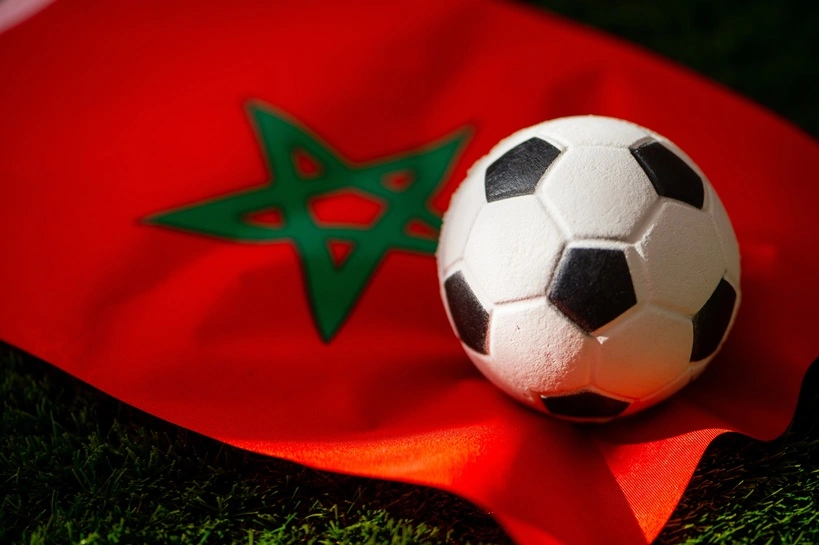

Football in the twenty-first century is no longer merely a sport decided on the pitch. It has become one of the most influential instruments of soft power, enabling countries to strengthen their international presence, attract investment, boost tourism, and enhance their global image. Within this context, Morocco has emerged as a compelling example of how long-term strategic planning can transform football from a sporting activity into a national project that serves broader economic, developmental, and diplomatic objectives.
According to Transfermarkt, the current market value of the Moroccan national football team stands at €447.7 million, making it one of the most valuable national teams in Africa and the Arab world. This figure reflects not only the commercial value of its players but also the success of an integrated strategy that has invested in talent development, modern sports infrastructure, effective governance, and the integration of sport into Morocco’s broader economic development agenda.
This transformation was not solely the result of Morocco’s historic achievement at the FIFA World Cup Qatar 2022, although that tournament marked a turning point in the world’s perception of Moroccan football. Rather, it was the outcome of a long-term vision built over many years, centered on investing in human capital, modernizing talent development systems, and upgrading sports infrastructure within an institutional framework that positioned football as one of Morocco’s most effective soft power assets.
From becoming the first Arab nation to participate in the FIFA World Cup in 1970 to preparing to co-host the 2030 FIFA World Cup alongside Spain and Portugal, Morocco’s journey illustrates a remarkable transition—from a country seeking international sporting recognition to one that strategically leverages football to promote development, strengthen international confidence, and consolidate its position in Africa, the Arab world, and beyond.
From a Participating Nation to an Influential One
Morocco’s World Cup journey began in 1970 when it became the first Arab nation to qualify for the tournament, opening the door to Arab participation in football’s biggest global event. Sixteen years later, Morocco achieved another historic milestone by becoming the first Arab and African nation to top its World Cup group at Mexico 1986, finishing ahead of several established European football powers and proving that global football was no longer the exclusive domain of traditional giants.
At the 1998 FIFA World Cup in France, Morocco delivered one of its strongest performances, securing an impressive victory over Scotland. Despite its convincing display, the team was eliminated because of other group results, in what remains one of the tournament’s most memorable examples of a performance that deserved a better outcome.
The country’s greatest breakthrough came at the FIFA World Cup Qatar 2022, when Morocco became the first Arab and African nation to reach the semi-finals, defeating some of the world’s most successful football nations along the way. More than a sporting achievement, this remarkable run captured global media attention and presented Morocco as a nation capable of strategic planning, excellence, and competing at the highest international level.
This progress was not limited to the senior national team. Morocco’s success extended across multiple age categories, with the Olympic team winning the Africa U-23 Cup of Nations, the U-17 national team claiming the Africa Cup of Nations title, and the local national team winning the African Nations Championship (CHAN). Meanwhile, the senior national team continued its rise among the world’s elite, reaching fifth place in the FIFA World Ranking in 2026 — the highest ranking in the country’s history.
As Morocco continues to perform strongly in international competitions while preparing to co-host the 2030 FIFA World Cup with Spain and Portugal, it is no longer simply participating in major sporting events. Instead, it has become an influential actor helping shape their future, reflecting its evolution from seeking international sporting recognition to using football as a strategic instrument of global influence.
Soft Power Is Built in Talent Development Centers
Morocco’s rise has not been the result of an exceptional generation of players or temporary success, but rather the product of a long-term institutional project that placed investment in people at the heart of football development.
A major turning point came with the establishment of the Mohammed VI Football Academy in 2009 as part of a Royal Initiative and Vision aimed at transforming Morocco’s football ecosystem. The academy adopted a modern model that combines education, elite football training, and social development, becoming a regional benchmark for identifying and nurturing talent. It has produced players who have gone on to compete in Europe’s top leagues while representing Morocco across different national teams.
Investment has gone well beyond the academy itself. Morocco has expanded regional training centers, strengthened coach education programs, modernized technical and physical preparation, and integrated digital analytics and performance data into player development. Cooperation with Mohammed VI Polytechnic University (UM6P) has also contributed to introducing scientific research and innovation into the sports sector, reflecting Morocco’s transition from individual talent development to a knowledge-based institutional model.
Morocco recognized early on that building a national team capable of competing at the highest international level begins with investing in children and young athletes rather than relying on short-term solutions. This long-term vision has provided Moroccan football with a sustainable foundation that extends far beyond the achievements of a single tournament or one exceptional generation of players.
Football: An Economic Industry Beyond the Pitch
Football in Morocco is no longer merely a sport or a form of entertainment. It has evolved into a growing economic sector that strengthens the country’s national brand. The rising market value of the Moroccan national team, combined with the increasing number of Moroccan players competing in Europe’s top leagues, has significantly enhanced the appeal of Moroccan football to sponsors, investors, and international media.
This evolution reflects the growing economic value of football through increased sponsorship agreements, broadcasting rights, advertising revenues, official merchandise sales, and rising investor interest in the sports sector. Morocco’s national team matches have become global media events rather than simple sporting contests. The semi-final match between Morocco and France at the FIFA World Cup Qatar 2022 attracted more than 20.7 million viewers in France alone, highlighting the team’s expanding international appeal. In addition, demand for the Moroccan national team’s official jerseys surged following the tournament, with Puma products selling out in several international markets, demonstrating how the team has evolved from a successful national squad into a globally recognized sports brand. This unprecedented media exposure and public enthusiasm provided Morocco with an exceptional opportunity to promote itself as an attractive destination for investment, tourism, and business, further reinforcing football as one of the Kingdom’s most powerful soft power instruments.
The economic impact has also extended to Morocco’s tourism sector, one of the country’s main economic pillars. In 2024, Morocco welcomed a record 17.4 million international tourists, representing a 20% increase compared to 2023 and achieving its tourism target two years ahead of schedule. Tourism revenues reached MAD 104 billion during the first eleven months of the year, while the Kingdom now aims to attract 26 million visitors annually by 2030, coinciding with its co-hosting of the FIFA World Cup. These figures illustrate the growing synergy between sport, tourism, and economic development.
Football and Diplomacy
Morocco’s experience demonstrates that football has become one of the most influential instruments of public diplomacy in the twenty-first century. Following the historic achievement at the FIFA World Cup Qatar 2022, Morocco’s national team matches attracted worldwide media attention not only because of their sporting success, but also because they projected the image of a country capable of combining sporting ambition with institutional stability and cultural openness.
Football has also strengthened Morocco’s presence across Africa through sports cooperation and knowledge exchange while reinforcing ties with Moroccan communities abroad, which have become a natural extension of the country’s soft power by promoting a positive image of Morocco in cities and capitals hosting international competitions.
This momentum has also benefited other sectors, particularly tourism, as Morocco has gained increasing visibility across international media outlets and social media platforms following its sporting achievements, enhancing its attractiveness as both a tourism destination and an investment hub.
In this sense, football has become far more than a vehicle for winning matches. It has evolved into a universal language that promotes dialogue among peoples, strengthens international relations, and builds trust, making it one of Morocco’s most effective tools of soft power.
From Qatar 2022 to the 2030 FIFA World Cup
Co-hosting the 2030 FIFA World Cup with Spain and Portugal represents another milestone in Morocco’s sporting journey. More importantly, it constitutes a comprehensive national development project extending well beyond the tournament itself.
Morocco is investing heavily in upgrading existing stadiums and constructing new world-class sports facilities, including the Hassan II Stadium, which is expected to become one of the largest football stadiums in the world with a capacity of approximately 115,000 spectators. The program also includes expanding transportation networks, modernizing airports, and improving tourism infrastructure and public services to strengthen the country’s ability to host major international events.
Preparations also involve increasing the annual capacity of Morocco’s airports from 38 million to 80 million passengers by 2030, alongside expanding the high-speed rail network and connecting additional cities. These investments position the World Cup as part of a long-term national strategy aimed at improving infrastructure and enhancing Morocco’s economic competitiveness.
The significance of these projects extends well beyond sport. They are expected to generate employment, stimulate construction, tourism, and service industries, and enhance Morocco’s attractiveness to foreign investors. Furthermore, the extensive participation of Moroccan companies and engineers demonstrates the country’s growing technical expertise and ability to deliver major infrastructure projects that meet international standards.
Hosting the 2025 Africa Cup of Nations will serve as a crucial rehearsal before the 2030 FIFA World Cup, allowing Morocco to test its organizational capabilities and capitalize on the experience gained from staging a major continental tournament.
Security and Organization: A Pillar of Morocco’s Soft Power
Alongside infrastructure development, Morocco has established a strong international reputation for organizing and securing major sporting events. Moroccan institutions have accumulated extensive experience in event management by adopting advanced technologies in planning, coordination, and crowd management, thereby strengthening the confidence of international sports organizations in the country’s ability to host global competitions.
In this context, security extends beyond protecting spectators and facilities. It has become an integral component of Morocco’s international image, reinforcing confidence among investors and international partners while demonstrating the country’s capacity to manage global events professionally and efficiently.
At a time when organizational excellence has become a benchmark for evaluating national readiness, Morocco’s achievements in this field represent another important dimension of its soft power alongside its sporting success.
Can Morocco Sustain This Influence?
The key question is whether Morocco can maintain this momentum beyond 2030. International experience demonstrates that hosting major sporting events alone is insufficient to generate lasting influence unless these investments are translated into sustainable progress in education, economic development, scientific research, and innovation.
Today, Morocco possesses several strategic advantages, including an advanced talent development system, modern infrastructure, a strategic geographic location, extensive organizational experience, and an institutional vision that positions sport as a central component of a broader national development strategy.
Nevertheless, preserving this position will require continued investment in football academies and training centers, further development of the domestic professional league, and greater support for scientific research and sports innovation to ensure that success is sustained across generations rather than depending on a single exceptional team or tournament. Morocco also faces the challenge of transforming its substantial investments in stadiums, transportation networks, and sports infrastructure into a lasting economic legacy that continues to support tourism, investment, and employment long after the 2030 FIFA World Cup.
Ultimately, Morocco’s ability to balance sporting ambition with sustainable economic development will determine the long-term success of its national sports strategy.
Today, the value of Moroccan football is measured not only by victories on the field but also by its capacity to attract investment, stimulate tourism, strengthen international media visibility, reinforce diplomatic relations, and showcase a successful Arab and African model that has effectively harnessed sport as a tool for development, diplomacy, and soft power.
In a world where non-traditional forms of influence are becoming increasingly important, Morocco’s experience demonstrates that investing in sport is no longer a luxury but a strategic choice capable of reshaping a nation’s position on the global stage.

