
An Analysis of the Shifting Global Balance, Emerging Multipolarity, and Fragmented Power Structures
Core Insight: The emerging international order is not simply a power transfer from Washington to Beijing, but a shift toward a permanently contested, multi-centered global system where flexibility and non-alignment define statecraft.
For years, one of the easiest ways to describe international politics was to start with the United States. Washington was not always able to get what it wanted. It lost wars, faced diplomatic setbacks and repeatedly encountered resistance from other major powers. Yet the basic structure of the international system was relatively clear. The United States possessed an unusual combination of military reach, financial influence, technological capacity and alliances, and no other country could match all of these forms of power at the same time. That assumption is becoming harder to sustain.
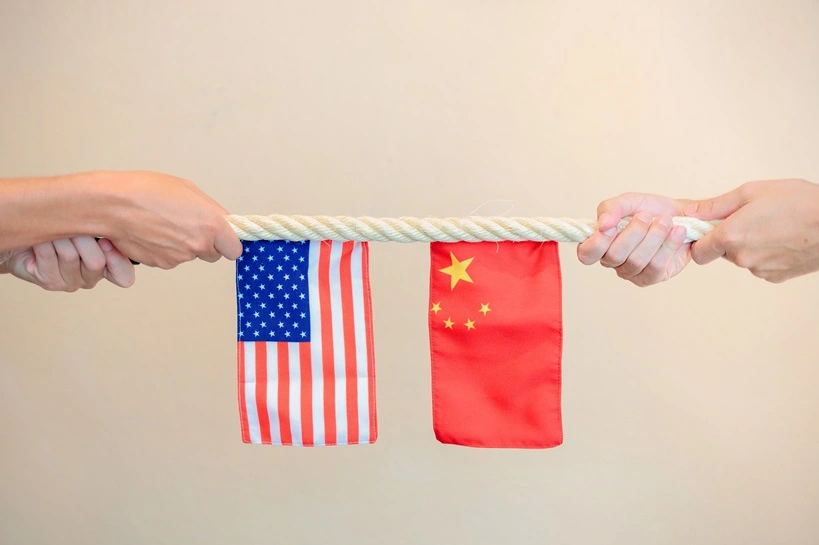
China’s rise, India’s growing weight, the greater strategic room available to middle powers and the increasing assertiveness of countries across the Global South are changing the distribution of power. The result, however, is not necessarily a straightforward transition from American dominance to Chinese dominance.
The more complicated possibility is that the world is moving toward a system in which power is spread across several centers—and where no single country is capable of setting the rules on its own.
A changing balance, not an American disappearance
It is important to distinguish between declining relative dominance and outright decline. The United States remains a formidable global power. Its military capabilities, financial system, technological companies, universities and network of alliances continue to give Washington influence on a scale that few other countries can reproduce. What has changed is the environment around that power.
China has become central to global manufacturing and trade. India has acquired greater economic and diplomatic weight. Middle Eastern powers have more options than they did in previous decades. Countries in Africa, Latin America and Southeast Asia are increasingly able to cultivate relationships with several major powers rather than relying on a single external partner.
A 2026 analysis by Sweden’s Defence Research Agency describes this as part of a broader redistribution of economic and political weight toward Asia and the Global South. It highlights China’s economic scale, India’s growing importance and the increasing influence of other emerging powers (FOI, 2026).
The significance of this shift is not simply that the United States has more competitors. It is that more countries now have alternatives.
China is not necessarily building a new American-style order
Much of the discussion about the future international system is framed as a contest over who will replace the United States. That framing may be too narrow.
China certainly wants a larger role in shaping global governance. In a 2026 policy document on global governance, Beijing called for a more genuinely multipolar international system, emphasized the role of the United Nations and argued for greater representation of developing countries in global decision-making (State Council Information Office of the People’s Republic of China, 2026). But greater Chinese influence does not automatically mean that China intends to reproduce the American model.
The United States built an extensive network of military alliances and security commitments after the Second World War. China’s international strategy has developed differently, combining trade, infrastructure, investment, diplomacy and strategic partnerships.
Beijing’s vision also faces a practical question: influence requires resources, institutions and political relationships, not simply economic size. China’s rise, therefore, matters enormously without necessarily producing a world in which Beijing simply occupies Washington’s former position.
The countries in the middle are changing the equation
The most interesting part of the emerging order may not be the competition between the two largest powers. It may be what other countries do with the space between them.
Many governments in the Global South have little interest in choosing a permanent side in a strategic rivalry between Washington and Beijing. Their priority is often much more practical: attracting investment, protecting access to markets, securing energy supplies, developing infrastructure and preserving room for independent foreign-policy decisions.
That does not make them neutral. A country can cooperate with the United States on security while expanding trade with China. It can maintain relations with Europe while developing partnerships with Russia, India or regional powers. It can participate in institutions associated with the West while supporting initiatives designed to give developing countries greater influence.
This flexibility is becoming a form of power in itself. The expansion of BRICS illustrates the trend, although it should not be mistaken for a unified geopolitical bloc. Its members have different economic structures, political systems and strategic interests. What many of them share is an interest in reducing the ability of any small group of states to define global rules without wider participation (FOI, 2026).
The distinction is important. The emerging order may be less about replacing one dominant bloc with another and more about making it increasingly difficult for any bloc to dominate every issue.
Power is becoming fragmented
There is another reason the transition is difficult to describe using the old language of superpowers: power itself is becoming fragmented.
Military strength matters, but so do financial networks, semiconductor technology, energy supplies, critical minerals, manufacturing capacity, food security, logistics and data. A country can be indispensable in one area and dependent on another country in a different one.
This is particularly visible in international trade. Globalization has not simply disappeared. Instead, economic relationships are being reorganized around strategic concerns.
Companies are increasingly forced to think about sanctions, tariffs, export controls, supply-chain security and geopolitical risk alongside traditional questions such as labor costs and market access.
A 2026 analysis by Boston Consulting Group describes an increasingly fragmented global trading environment in which countries and regional groupings operate through overlapping networks rather than one integrated system of rules (Boston Consulting Group, 2026).
That does not necessarily mean the end of globalization. It may mean the end of the assumption that globalization will always move in one direction.
The price of a more fragmented system
A multipolar world can offer smaller and middle-sized countries greater freedom. It can also make international politics harder to predict.
When power is concentrated, decisions can sometimes be made quickly—even if other countries strongly disagree with them. When power is distributed among several centers, almost every major decision becomes a negotiation. That has consequences beyond diplomacy.
Businesses have to consider geopolitical risk when choosing where to manufacture. Governments have to think about the security implications of technology and energy imports. Countries that once treated economic policy and foreign policy as separate areas increasingly have to manage them together.
The boundaries between economics and national security are becoming increasingly difficult to draw. This is perhaps one of the clearest signs that the old international order is changing.
So, is the unipolar era over?
The answer depends on what is meant by “unipolar.” If it means that the United States is no longer overwhelmingly more powerful than every other country across every major dimension, then the world has clearly moved away from the post-Cold War moment. If it means that American power has disappeared, the evidence points in the opposite direction.
The United States remains central to the international system. China is not an American replacement in every field. India is not a member of a fixed anti-American bloc. The Global South is not a single political entity.
The emerging system is therefore unlikely to resemble a simple transfer of power from Washington to Beijing. It may look more like a network of competing and overlapping centers. That world could give more countries a voice. It could also produce more uncertainty, more bargaining and more opportunities for miscalculation. Perhaps that is why the most useful question is no longer, “Who will replace the United States?”
The more important question is whether the major powers can establish workable rules for a system in which none of them can impose those rules alone.
The post-Cold War order did not end on a single day. The next international order may not begin on one either. It may emerge gradually — in trade agreements, new security partnerships, financial institutions, technology restrictions and diplomatic coalitions — until one day the world discovers that the old center of gravity has already moved.
The real transition, then, may not be from an American world to a Chinese world. It may be from a world with one overwhelmingly influential center to a world in which influence is permanently contested. That is a much less dramatic story than the rise of a new superpower. It may also be a much more accurate one.
References