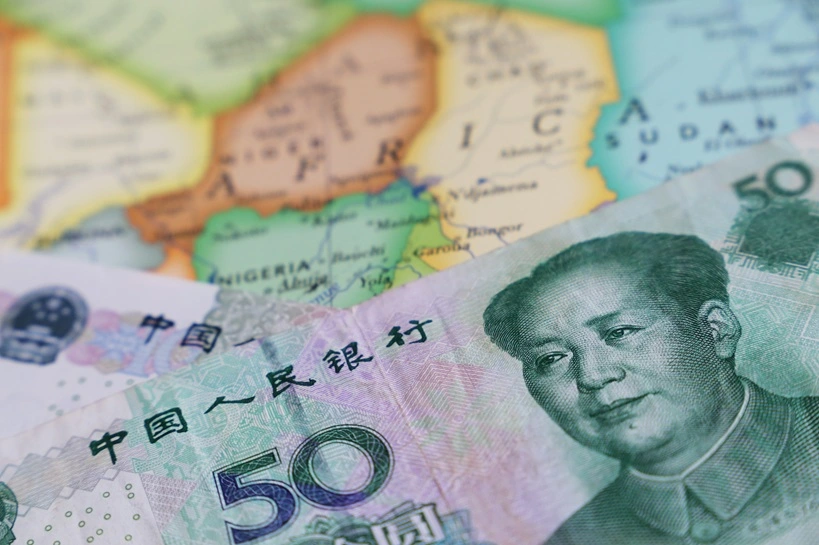
The Chinese government’s decision to grant zero-tariff treatment to imports from 53 African countries, effective from May 1, 2026, represents a significant shift in the economic structure of Sino-African relations. The new framework eliminates a long-standing asymmetry in China’s engagement with Africa by removing restrictions on imports not only from least-developed countries but also from middle-income economies.
In a world that is witnessing a rise in protectionism in various segments of the global economic system, this initiative is a clear indication that China is embracing globalization. Nevertheless, as much as this economic policy opens new avenues for exports to China, it is essential to understand that this tariff shift’s overall implications will rely on domestic economic policies.
The purpose of this article is to examine this shift from a balanced perspective, considering both the positives and negatives associated with these reforms. The argument is that zero tariffs may be advantageous, but cannot change Africa’s export pattern without corresponding investments in industry.
A Structural Shift in Trade Policy
China’s current strategy is a clear departure from its previous strategy for engaging African countries. Since 2005, the Chinese market’s preferential access has been limited to LDCs, comprising around 33 countries. This approach of offering zero tariffs to all African countries that have diplomatic relations with China represents a clear shift in policy.
This change is of great significance to middle-income African countries such as South Africa, Morocco, and Kenya. These countries have been subject to tariffs of 10-25 percent on their key products. The current policy removes this barrier and ensures a level playing field in the region. At the same time, it addresses the long-standing imbalances in trade between China and Africa.
In 2025, total trade between China and African countries was valued at about $348 billion. However, Chinese exports were valued at about $225 billion, while African exports to China were valued at only $123 billion.
Potential Gains: Market Access and Export Diversification
The major immediate benefit of the zero-tariff policy is the improved access to the market. The African countries involved in the trade agreement, especially in the agricultural sector, textile industry, and manufacturing sector, are likely to face fewer price hurdles in accessing the Chinese market. This consideration is more relevant to the middle-income countries that have traditionally faced marginalization.
For instance, consider the case of Kenya’s tea and horticulture industry, which covers products ranging from coffee, avocados, flowers, and vegetables. This duty-free agreement, which will commence on May 1, 2026, will allow 53 African countries, including Kenya, to benefit from preferential access to China, thus enhancing competitiveness. The agreement will allow Kenyan products to enjoy a price advantage over competitors, considering the huge market of over 1.4 billion people. This will be based on the current levels of exports, which include around $24 million worth of coffee and tea products shipped in the preceding year. However, this will depend on the quality and logistical aspects, as emphasized by Kenyan officials.
In theory, this tariff reform is likely to improve the price competitiveness of the African countries’ products in the Chinese market compared to other exporters. Coffee, tea, fruits, and other products are likely to benefit from the increased demand as long as the trade facilitation measures are also improved.
Another advantage of the initiative is the diversification of the export base of the participating countries. Previous literature on the trade preferences granted to China suggests that the reduction of tariff barriers can result in the diversification of the export base.
Finally, the policy can act as a shock absorber in the face of global economic dynamics. Global trade is increasingly being dictated by geopolitical tensions and the rising trend of protectionism. The African countries can benefit from the relatively stable Chinese market as a buffer against the risks of fluctuations in the global market.
The Risk of Uneven Gains
In spite of these potential benefits, it is unlikely that all these benefits will be equally shared. The first concern is that the more industrialized economies of Africa will corner more of these benefits. Economies such as South Africa, Morocco, and Kenya have more developed and robust industries and better infrastructural facilities. This will enable these countries to increase their export levels more rapidly than others.
On the other hand, many of these least developed countries (LDCs) still struggle with structural problems. These problems include inadequate and erratic power supplies, inadequate transport facilities, and problems of meeting international standards of quality. For these countries, tariffs are not an issue. Hence, for these countries, this new policy measure may not have a significant impact.
However, this new policy measure may actually work against the interests of these LDCs. This is because, by offering zero tariffs to all countries, China has effectively eliminated the differential treatment that these LDCs used to enjoy. The LDCs will be at a disadvantage unless they improve their export competencies.
Regional Supply Chains as a Mitigating Mechanism
The most promising part of this framework is that it may stimulate regional supply chains. This is because it seeks to bridge the gap that exists between different countries in the form of tariffs. In this case, different countries have the opportunity to specialize in different aspects of the supply chain in which they have a comparative advantage.
If we take a case where one of the least developed countries is endowed with resources that can be used as input in the production of a product in a middle-income country, which is relatively more advanced in processing, and the finished product is exported to China without any tariffs, different countries have an opportunity to benefit without having to build an export strategy from scratch.
However, the benefits of this policy will be realized if regional integration is effective. In this case, the African Continental Free Trade Area (AfCFTA) may be used as an engine in facilitating regional integration. However, there is a challenge in this case because non-tariff barriers, regulations, and infrastructure connectivity are issues that affect trade in Africa. In order to realize the benefits of supply chain integration, there is a need to improve regional institutions. In the absence of this, there is a possibility that disjointed and inefficient supply chains may result.
Beyond Tariffs: The Centrality of Structural Reform
In Africa, as a continent, industrialization is still uneven and sometimes limited. A significant part of Africa’s exports to China comprises raw materials. These include minerals as well as agriculture. While this is a significant source of revenue, it is not a sector that has much potential in terms of value addition as well as job creation.
Beijing’s new framework, on its own, is not sufficient to address Africa’s challenges. Without specific policies in terms of industry development, investments in manufacturing, as well as improvements in terms of education and skills development, Africa may not be able to move up the value chain. In addition to that, trade facilitation should be accompanied by efforts to ensure that countries are able to meet international standards.
From a broader point of view, the new agreement reflects China’s shifting stance with regard to its economic engagement with Africa. China, by supporting African exports, not only addresses the concerns of economic imbalance in the relationship but also cements its position as the main economic partner of Africa.
At the same time, the policy reflects China’s strategic interest in gaining access to key resources and augmenting its position as a major economic player in the world economy. A stable and industrialized Africa has the potential to act as a market as well as a source of resources for the world economy.
For the African countries, the problem is that of engaging with China on terms that benefit them the most, which calls for the formulation of joint negotiating strategies, especially at the regional level, with a focus on long-term developmental objectives.
Global Trade Implications: Competition and Influence
Outside of Africa, this move has important implications in the global trade arena in terms of competition. In an era where the United States and the European Union are moving towards a more protectionist and selective trade regime, China’s move is a declaration of support and promotion of free trade, at least in the Global South.
In the case of the European Union, which has a pre-existing preferential trading arrangement with African countries, this move may spell a new wave of competition in the African arena. The same goes for the United States, which has the African Growth and Opportunity Act (AGOA) in place, and may be forced to reassess its trade engagement in Africa in order to keep up with the competition.
In this regard, therefore, the move of the Chinese state is not just economic in nature but rather strategic in the geopolitical arena as well.
Conclusion
The zero-tariff initiative by China with regard to Africa is a welcome move, and this marks a significant step in international trade. However, it should be noted that the success of this measure will depend on the response of the African economies.
It should be noted that this measure should not be seen as a solution, but as an enabler. The problem with Africa, in relation to this measure, is not about exporting more, but about exporting smarter in an increasingly competitive world.